The Left Berlin News & Comment

This is the archive template

News from Berlin and Germany, 21st May 2025

Weekly news round-up from Berlin and Germany


21/05/2025

NEWS FROM BERLIN

Berlin teachers walk out for three days

Teachers, educators and social workers at Berlin schools have begun a warning strike, called by the GEW education union. Their main demands? Smaller class sizes and a collective agreement on health protection. The Berlin Senate has so far refused to negotiate, citing its obligations as part of a national wage agreement between Germany’s states. The timing of the strike drew criticism – not only from Berlin’s education senator Katharina Günther-Wünsch (CDU), who called it “irresponsible,” but also from students, given that it is exam period. The GEW defended its decision. “Each school with exams is only affected on one day,” said Berlin GEW co-lead Martina Regulin. Source: theberliner

NEWS FROM GERMANY

Death suits it well

Rheinmetall is profiting greatly from the business of death. Over the past ten years, the company’s share price has “achieved a phenomenal performance with an increase of well over 2,000%,” CEO Armin Papperger exulted at the armaments group’s Annual General Meeting last Tuesday. Beyond that, Rheinmetall is anticipating a “security policy decade with extensive investment programmes over the next ten to 15 years.” With government orders making more than six billion euros since 2022, Rheinmetall has long seen itself as “the leading industrial partner” of Germany. Some days ago, around 1,800 people protested against weapons production at the Rheinmetall site in Berlin. Source: jW

Die Linke Left must not cave in to the Zentralrat der Juden

Following Die Linke’s decision to base its definition of antisemitism on the “Jerusalem Declaration” instead of the IHRA (International Holocaust Remembrance Alliance), the Zentralrat der Juden in Deutschland (Central Council of Jews in Germany) has sharply attacked the party. Even if it is true that those affected usually know best what discrimination is, it would be fatal if the Left were to give in to their demands. Many Jewish diaspora organisations are calling for exactly the opposite, rejecting the IHRA definition. And Palestinians are also greatly affected by this issue. What should not be discussed are the expulsion plans in Gaza, which violate international law. Source: nd

Dobrindt bans the “Kingdom of Germany”

A few days after taking office, Federal Minister of the Interior Alexander Dobrindt banned what is currently the largest group of so-called Reich citizens and self-governed citizens. The organisation calls itself the “Kingdom of Germany” and is said to have around 6,000 followers across the country. According to the Ministry of the Interior in Berlin, police forces searched buildings and flats used by the organisation in seven federal states. Four men were arrested, among them Peter Fitzek, who describes himself as the “King” and “Supreme Sovereign.” They will now be brought before an investigating judge at the Federal Court of Justice in Karlsruhe. Source: nd

Berlin and London develop joint long-range weapon

The Bundeswehr is to become “the strongest conventional army in Europe”. That ambitious goal was set by Federal Chancellor Friedrich Merz (CDU) in his first statement in the Bundestag. “We must be able to defend ourselves so that we don’t have to defend ourselves,” emphasised the new head of government about the threat posed by Russia. This is to be done in coordination with European partners. Germany is now placing a particular focus on military cooperation with the UK. The so-called Trinity House Agreement, named after the place in London where it was signed by the UK and Germany, represents the first pact of its kind. Source: dw

Border controls “only feasible for a few more weeks”

According to the police union GdP, the German government’s tightened border controls cannot be maintained in the long term, amid concerns the German rules could break EU law. The CDU/CSU is satisfied with the results so far. Interior Minister Alexander Dobrindt and Markus Söder (CSU, CSU) also defended those measures last week. For the SPD’s interior affairs expert Lars Castellucci, however, the German approach harbours dangers. “With stricter border controls and uncoordinated rejections, including of asylum seekers, we run the risk that our European neighbours will abandon the common course of asylum reform in Europe and rely on national measures,” Castellucci affirmed. Source: taz

Video footage from a bar: AfD spokesperson wanted to let refugees into the country to gas them

The AfD parliamentary group in the Bundestag has dismissed its former press spokesperson Christian Lüth following reports of inhumane statements about migrants in a ProSieben channel documentary. When asked “whether it would be in your (Lüth’s, editor’s note) interest for more migrants to come,” he answered: “Yes, because then the AfD will be better off. We can always shoot them all later. That’s not an issue at all. Or gas them, or whatever you like. I don’t care!” Faction leader Alexander Gauland announced he had personally informed Lüth of his dismissal, a decision that was unanimous in the executive committee of the parliamentary group. Source: tagesspiegel

News from Berlin and Germany, 14th May 2025

Weekly news round-up from Berlin and Germany


14/05/2025

NEWS FROM BERLIN

“Berlin4”: court halts all deportations

The state of Berlin has suffered another set back in the dispute over the intended deportation of four activists accused of criminal offences following their participation in pro-Palestinian protests at Freie Universität in October 2024. In the case of the so-called “Berlin4”, the Berlin Administrative Court has ruled in favour of those affected in the last two cases last Monday. They are from the USA and from Poland. On 10 April and 6 May, the court upheld the appeals of a man and a woman with Irish citizenship in initial summary proceedings. Source: nd-aktuell

No weapons production in Wedding

The armaments group Rheinmetall is one of the winners of the war. With the military turnaround, the value of the company’s shares has multiplied. Now Rheinmetall is reorganising production at several sites in Germany: where previously civilian goods were produced, armaments are to be manufactured in future. This includes the subsidiary Pierburg in the Berlin district of Wedding. But resistance is mounting. On Saturday, around 1,500 anti-militarists demonstrated under the slogan “No Rheinmetall in Wedding” to demand that money be spent on social issues instead of armaments. The protest was organised by the Wedding grassroots group of the Left Party as well as numerous communist and socialist groups. Source: nd-aktuell

NEWS FROM GERMANY

Germany spends one in four euros on housing costs

People in Germany spend on average one in four euros on housing, according to figures from the European statistics authority “Eurostat”, which the Federal Statistical Office had analysed in response to an enquiry from the BSW. According to the data, individuals and families spent 24.5% oftheir income on rent or other housing costs, such as home ownership, in 2024. People at risk of poverty in Germany even spent an average of 43.8% of theirincome on housing, i.e. almost every second euro. This is 5.3% higher than the EU average. Source: Zeit

Right-wing violence: “The disinhibition is clearly noticeable”

In 2024, the counselling centres Opferberatung Rheinland (OBR) and BackUp from Dortmund set an unfortunate new record: 526 cases of right-wing, racist, antisemitic or other misanthropic violence were documented – an increase of around 48% compared to the previousyear. At least 728 people were directly affected. Eight people died because of attacks last year. “Homicides are an expression of maximum escalation – they make it clear that right wing violence in NRW is life-threatening,” says Sabrina Hosono from the OBR. Fabian Reeker, also from the OBR, speaks of an “alarming peak in right-wing violence” in North Rhine-Westphalia. Source: ad-aktuell

Demonstrators in several cities call for AfD ban

Demonstrations against right-wing extremism and in favour of an AfD ban took place in more than 60 German cities on Sunday – including Berlin and in Brandenburg. The demonstrations were organised by the “Together against the right” network and the “Defend human dignity – ban the AfD now” initiative. In the nation wide announcement, the organisers called on the federal government to initiate proceedings to ban the AfD. The central rally in Berlin began at 4 pm at the Brandenburg Gate. According to the police, around 4,000 people took part. The organisers spoke of around 7,500 demonstrators. Source: rbb

Antisemitism dispute in the Left flares up again

At a party conference in Halle, on 9 and 10 May, “Die Linke” declared its solidarity with the Palestinians, demanded the release of the Israeli hostages and condemned Hamas terrorism as well as “every act of war by the Israeli army that violates international law”. Antisemitism was also discussed, with criticisms how accusations of antisemitism are instrumentalised by politicians and institutions to silence people who denounce Israeli war crimes. Most of the party conference had opposed the misuse of anti-Semitism of the International Holocaust Remembrance Alliance (IHRA), not against to its definition. Source: nd-aktuell

Be human!

Margot Friedländer died on Friday 9 May at the age of 103 in the city of her birth. On the day of her death, she should have received the Grand Cross of the Order of Merit of the Federal Republic of Germany. She had been showered with honours and awards in recent years. Margot Friedländer suffered the torments of Nazism and fought for humanity, with the call: “Be human!” For today, this also means: ban the AfD! And all other right-wing extremist movements and groups that are once again coming to the surface in Germany. And a humane migration policy. Source: nd-aktuell

Non-Germans should have voting rights after 5 years’ residence, says “die Linke”

The co-leader of the Left Party (“die Linke”) Jan van Aken, has proposed a six-point plan to strengthen the country’s democratic system: 1) Introducing referendums (Volksentscheide) at the federal level; 2) Bringing the national voting age down to 16 years old; 3) Enfranchising international residents who have been living in Germany for at least 5 years; 4) Establishing citizens’ councils at the state and federal level; 5) Capping single, private donations to political parties at 10,000 euros; and 6) Expanding residents’ voting rights on specific economic matters. The last point would expand all residents’ voting rights on specific economic issues, such as when a company were planning location closures. Source: iamexpat

Police file reveals new details about Mengele

Reporters from MDR (Mitteldeutscher Rundfunk) have tracked down a police file on Nazi criminal Josef Mengele that was previously thought to be missing. The documents, which apparently come from the archives of the Argentinian Federal Police, contain explosive information about Mengele’s whereabouts after the Second World War. The documents show that Mengele wanted to enter the Federal Republic of Germany in February 1959. The file contains a corresponding application to the Argentinian authorities using his real name, which was not previously documented. The renowned contemporary historian and Nazi researcher Bogdan Musial has examined copies of the file indetail and considers them to be authentic. Source: tagesschau

News from Berlin and Germany, 06th May 2025

Weekly new round-up for Berlin and Germany


07/05/2025

NEWS FROM BERLIN

22,000 take to the streets for the 1st of May

The May Day protests in Berlin were more peaceful than in previous years. According to the police, 22,000 people took part in the “Revolutionary May 1st Demo,” but there were relatively few arrests and injuries. The police claim that this is the merit of their new de-escalation tactics, and received the praise of Berlin’s Minister for the Interior, Iris Spranger (SPD). The revolutionary demo was just one of many, after the previous day’s “Take Back the Night” queer-feminist protest, the DGB union protest, and the satirical “Milei, Musk and Merz to Mars” demo in Grunewald. Source: tagesspiegel

Berlin’s Senator for Culture Joe Chialo resigns

Joe Chialo (CDU) resigned after being Berlin’s Senator for Culture and Social Cohesion in Kai Wegner’s Senate since 2023. Speculation as to whether he would become Federal Minister of State for Culture, came to an end once the CDU officially announced that media entrepreneur Wolfram Weimer would take over that post. Chialo’s time in office was not without controversy, such as the conflict surrounding the “antisemitism clause” proposed after the Hamas attack on Israel. He was also sharply criticised for the Berlin Senate’s austerity measures, which have had a massive impact on the cultural sector. Source: bz

Sarah Wedl-Wilson becomes Berlin’s new Senator for Culture

Sarah Wedl-Wilson will take Joe Chialo’s place as the Senator of Culture in the capital. Berlin’s mayor, Kai Wegner (CDU), claimed that Wedl-Wilson understands the problems and enjoys the trust of cultural workers. Unlike her predecessor, Wedl-Wilson is not a member of the CDU party. Born in Great Britain in 1969, the long-time cultural manager not only has experience in cultural administration but is also considered a long-standing expert on Berlin’s cultural scene. During the announcement, when asked about the budget cuts, she just stated that “Berlin will remain a cultural metropolis.” Source: rbb

NEWS FROM GERMANY

Islamophobic MP becomes State Secretary

Christoph de Vries (CDU) has spent years dealing with migration and made a nationwide name for himself with racist statements. The Hamburg politician is now to become State Secretary in the Federal Ministry of the Interior. He announced he wants to “do everything in his power to make the asylum turnaround a reality.” The fact that de Vries is promoted outraged the Hamburg Alliance Against the Right (HBgR), among other organisations. “The CDU man represents AfD positions,” according to HBgR spokesperson Felix Krebs. At a panel discussion in 2021, de Vries presented an “integration scale,” where he ranked foreigner groups from starting downwards from those who share “the same level as the organic Germans.” Source: taz

Gérard Depardieu concert on Rügen cancelled

The French actor Gérard Depardieu had planned to perform at the Putbus theatre on the island of Rügen last Friday. However, the event was cancelled at short notice. According to the theatre, he is not allowed to leave France, where he is currently on trial for sexual assault. The director of the Putbus theatre, Peter Gestwa, affirmed that they only found out about the travel ban on Thursday afternoon. “It came as a surprise that the public prosecutor’s office turned up and wanted his passports,” he added. The event was sold out. Source: bz

The pension system and the coalition agreement

There are two aspects in the coalition agreement that might be politically and economically explosive. Firstly, the coalition could be planning to oblige the self-employed to join the statutory pension scheme, which could be a major advance – or a drop in the ocean. The major drawback of statutory pension insurance for the self-employed is that they pay their contributions alone, i.e. there is no employer who pays half of the contributions. Secondly, the pension level could be abolished as an assessment parameter, without a clear alternative outlined in the document. A major pension reform is still not in sight. Source: focus

Federal Office for the Protection of the Constitution classifies AfD as right-wing extremist

The AfD has now been classified as confirmed right-wing extremist throughout Germany by the Federal Office for the Protection of the Constitution. This previously only applied to three state associations: Thuringia, Saxony, and Saxony-Anhalt. Nationwide, the AfD has been listed as a suspected right-wing extremist case since March 2021. This authorized the domestic intelligence agency to use resources such as informants, surveillance, and the analysis of public and non-public sources. The AfD itself considers the decision to be politically motivated. As Deputy Chairman Stephan Brandner told the Rheinische Post, such a decision has a damaging meaning on the image of the party. Source: dw

“AfD politicians have no place at concentration camp commemorations”

Germany is currently commemorating the end of WWII and the liberation of the concentration camps 80 years ago. Brandenburg’s memorial director, Prof. Dr. Axel Drecoll, warned of the rise of right-wing extremists at the former Sachsenhausen concentration camp. “The AfD trivializes the crimes of the National Socialists,” he said. “For them, the end of the Nazi regime is not a liberation.” Drecoll argues that coming to terms with the Nazi era and protecting fundamental rights are intertwined: “Today, we have a responsibility to defend this foundation by all means.” Source: bz

Merz elected Chancellor on second attempt

CDU leader Friedrich Merz has been elected Chancellor on his second attempt. The 69-year-old achieved the needed majority of more than 316 votes in the Bundestag. 325 members voted for him, 289 against, and one abstained. The new governing coalition of the CDU/CSU and SPD has 328 votes in parliament. Among the first to congratulate Merz was outgoing Chancellor Olaf Scholz (SPD). Federal President Frank-Walter Steinmeier subsequently received Merz at the Bellevue Palace and presented him with his certificate of appointment. This morning, Merz had fallen short of the required majority in the first round of voting – a unique event in the history of the Federal Republic. Source: tagesschau

Friedrich Merz Finally Gets to Be Chancellor

Merz has dreamt of this since the 1990s, potentially a nightmare for the rest of us

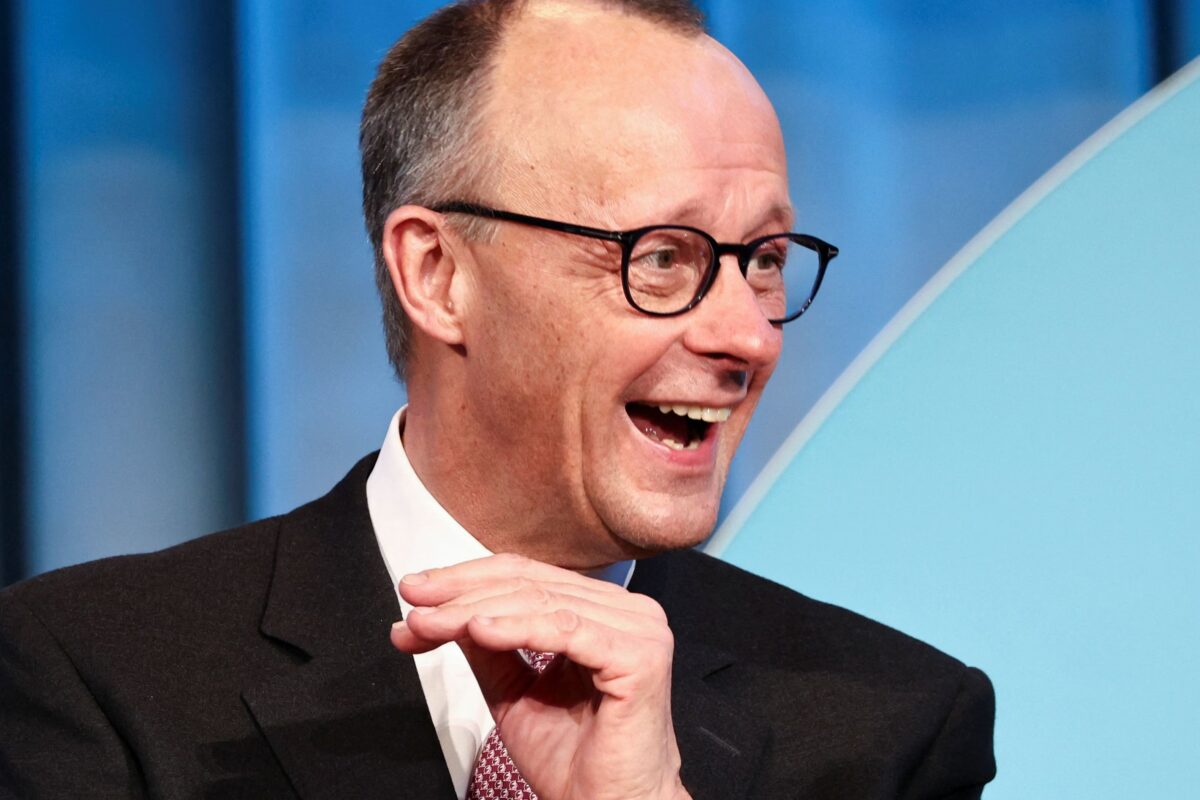
Friedrich Merz laughing at something off-camera.

It was actually a series of scandals in the 1990s that allowed for Friedrich Merz’s quick rise to political prominence. Following several corruption scandals that rocked the leadership of the CDU and stripped it of the popular support it needed to continue governing, the party fell to the SPD in the 1998 elections. While a major setback for the party, the resulting clearing of ranks created the conditions which allowed for the rise of two young and ambitious CDU politicians who had kept their images clean and whose careers would become thoroughly intertwined: Merz and Angela Merkel.

Joachim-Friedrich Martin Josef Merz was born in 1955 in Brilon, North Rhine-Westphalia in a stately Catholic family home––now protected by denkmalschutz (laws protecting historical monuments). His mother was from the local noble Sauvigny family, of French origin. His father was a judge and a member of the CDU. It was probably no great shock to the family when Merz Jr. decided to join the CDU himself in 1972, and then studied law.

After finishing his studies and a brief spell working as a corporate lawyer, he was able to make politics his full time job. At 34 he ran for and won a seat in the European parliament in 1989. In the 1994 Bundestag elections, the CDU and its leader Helmut Kohl narrowly maintained their role running Germany and the young Merz won his first seat in the Bundestag as part of the ruling coalition. Already in these early days he showed ambition, with an eye on rising through the ranks of the party.

By the next election, the CDU’s position had changed drastically, with the old guard stepping away and Merkel and Merz becoming figures of renewal. By the year 2000, Merkel led the party structures and Merz the Bundestag faction, acting as co-leaders of the party. While Merkel represented the Christian liberal wing of the party, Merz stood for the neoliberal and socially conservative right wing. The two did not get along particularly well, and as the successfully rehabilitated CDU prepared for the 2002 election it was clear there would be a fight over who ran as chancellor, a position both Merkel and Merz coveted.

In a moment that would change the trajectory of Merz’s life, Merkel bested him, slipping away to the so-called Wolfrathauser Frühstuck hosted by the leader of the CDU’s Bavarian sister party, the CSU. Here, she secured the candidacy to run for chancellor.

Merkel won the election and decided not to give her former co-leader a ministerial post. The message was clear. In 2004, Merz retired as head of the faction, effectively conceding defeat. In 2009, he decided not to run for parliament at all, choosing to return to the private sector once his leadership ambitions were squashed.

Merz’s Time in the Private Sector

Merz’s experience in the German government and as a corporate lawyer, not to mention his political connections, would prove highly lucrative. In the mid-2000s, he took his promotion of capitalism outside of the Bundestag and into the private sphere, while accepting a long list of advantageous corporate positions. In 2008 he published a book, Mehr Kapitalismus wagen (roughly translating to ‘dare to do more capitalism’) pushing for further neoliberalism. At the time, he was asked by a Der Spiegel reporter how he felt about the timing of writing a full-throated defense of capitalism while many blamed capitalism for the recent financial crisis. In his confident, bulldozer style, he responded simply that he “couldn’t have wished for a better timing.”

A recent report by the investigative journalism outfit CORRECTIV highlights his close industry ties throughout his time in the private sector. His main connection was to the legal firm Mayer Brown, where he worked for 16 years. Through this experience, as well as other advisory boards, Merz developed a particularly close relationship with the metal and chemical industries––even lobbying for the latter in Brussels. The metal industry naturally brought him closer to the auto industry. While at Mayer Brown, he worked closely with the chemical corporation BASF (for which he was also a senior consultant at one point). BASF is the largest corporate user of water in Germany, an increasingly important topic in the country as regions like Brandenberg have their groundwater sucked dry by corporations in the name of profits.

This was far from his only controversial position. Merz also worked for the notorious BlackRock, the largest asset manager in the world, known for investing in all kinds of exploitative businesses. Drawing on his experience in EU and German parliaments, he was responsible for maintaining relationships with governments and government offices on behalf of BlackRock Germany. Journalists point out that Merz was also working with three different financial institutions which have faced allegations in the Cum-ex tax fraud scandal, when various traders and banks stole billions of euros which should have gone into government coffers. His role in relation to the scandal is still unclear.

All in all, as CORRECTIV lays out, Merz has sat on advisory or administrative boards for BASF, Bayer AG (another chemical company), AXA Insurance, DBV Insurance, Commerzbank, HSBC, BlackRock and more. He also chaired the Atlantik-Brücke for ten years, an important German political organisation which fosters a strong relationship between Germany and the USA, supporting the American-led global order. Through holding these various positions, Merz has become a millionaire, mostly while lobbying for better conditions for corporations. Now with Merz as Chancellor, he’ll push the same positions he was once paid for, except now at no cost to his former employers.

Saying the Quiet Part Out Loud

Incredibly, for Merz’s critics, his corporate connections and relationship to various economic scandals often take a backseat compared to his blasé comments. Merz regularly makes it into the news for saying something cringe, outright racist, and/or sexist. He is notorious for these throwaway comments, and, while the list could go on forever, reviewing some of his scandals helps give an insight as to who the man is.

Back in 2001, when then candidate for Berlin mayor Klaus Wowereit came out as gay during the local election, Merz reacted by saying that “so long as he doesn’t come near me, it doesn’t matter.” In 2021, as Merz was regularly being associated with misogyny, he took to Twitter to tell the world that “if I really had a ‘woman problem’, as some say, then my daughter would have given me the yellow card a long time ago, and my wife wouldn’t have married me 40 years ago.” Even the Berliner Zeitung called it a “shitstorm.”

In 2004, the fact that his hometown was run by an SPD mayor bothered him so much he called for a storming of the city hall. As an example of proper governance, he referred to the years when his maternal grandfather Josef Paul Sauvigny was mayor for the rightwing catholic Zentrumspartei. This caused backlash since Herr Sauvigny served from 1917 until his retirement in 1937, overlapping with the rise of the Nazi party. Around a week after his comments, Merz was forced to release a statement admitting that his grandfather had actually joined the NSDAP in 1933, as it became clear that the Taz had been digging around in archives and were about to release the information themselves.

On a televised program in 2023 he called the children of migrants “little Pashas,” referring to how (assumedly brown) children whose parents were unwilling to assimilate were supposedly terrorising school teachers. The poor, “mostly female” teachers who dealt with these children were used as a justification for his pro-deportation stance. Later that same year at the Bavarian festival Gillamoos, he stated “Kreuzberg isn’t Germany, Gillamoos is Germany.” Partially a jab at the diverse and left-leaning population of the Berlin district, Merz’s comment also demonstrates his disdain for the urban parts of the country.

Merz also provoked controversy for his justification of why he would not implement gender parity in his cabinet. A candidate who had been accused of having a ‘woman problem’ might be expected to handle the subject carefully, but Merz handled it in his characteristic blunt manner. Pointing to the brief tenure of the SPD’s Christine Lambrecht as defense minister, he argued that with such a “blatant miscasting” as this, “we are not doing women any favours either.”

Particularly impressive is that he has managed to create so many embarrassing sound bites, even before becoming the most important politician in the country. With all cameras now pointed at him, who knows what he’ll come up with next.

Return to Politics and Becoming Chancellor

In 2018, Merz finally got his chance for a triumphal return. Having stayed out of politics for as long as the top job was held by Merkel, he jumped back into politics––although he wasn’t so quick to step down from all his corporate positions; he was at BlackRock until 2020.

Merz immediately ran to lead the party, which would have given him a relatively secure chance of being the party candidate for chancellor in the upcoming election. He narrowly lost in two consecutive elections, a possible sign of how divisive a figure Merz is within his own party.

Following the election defeat to what would eventually become Olaf Scholz’s government, Merz, nothing if not stubborn in his belief in himself, ran once again in December that same year. This time, he finally achieved the position he had first vied for in 2000: undisputed leader of the CDU. His path was clear to run for chancellorship and, after Scholz’s disastrous turn in government, Merz breezed through an easy election to become chancellor of Germany.

In many senses, Merz is better suited to have ruled in the early 2000’s than now. It is easy to imagine the Atlanticist, neoliberal Merz sitting alongside Tony Blair, George Bush, and Stephen Harper, all wearing expensive suits, discussing the latest free trade agreement, and comparing who has the biggest austerity measures. 

That period was marked by an unshakeable confidence in the capitalism and neoliberalism ushered in by the West’s triumph over the Soviet Union. Political confidence swelled among the ruling classes, both in themselves and in their ideologies. Merz’s politics harken back to this triumphal capitalism before the 2008 market crash; the time when political leaders declared illegal wars on vaguely-defined threats, and got away with it. He is a product of that era, with its leaders whose economic policies led to the 2008 financial crisis and whose continued austerity failed to reverse the impacts of that crisis, until their power began to slip into the hands of figures like Donald Trump and Nigel Farage.

Now in Germany, the task of preventing a far-right ascendance, with the AfD on the verge of power, rests on Merz’s shoulders. While his economic policies are better suited to fostering a political crisis than resolving one, he has also already shown himself to be willing to play into the AfD’s hand if it advances his own interests and goals. In January this year, shortly before the elections, he broke the so-called ‘fire-wall’ against the AfD from mainstream political parties, relying on the party’s support to try and pass migration reforms in the Bundestag. The AfD’s leader called it “a historic day for Germany.”
Even in the time between winning the election and becoming chancellor his popularity had already begun to sink, perhaps the result of having won primarily due to the unpopularity of his main opponents. His own unpopularity was highlighted when he required two Bundestag votes yesterday to become chancellor, despite having already agreed on a coalition with the SPD. But Merz is likely to hold onto his position for as long as he can. Looking back over a career already full of more memorable throwaway comments than it’s possible to remember, it’s his ambition that seems to stand out the most, and which seems most likely to define his rule. Germany should beware the authoritarianism of the opportunist who, having fought so long and hard to get to power, will fight to retain it.

News from Berlin and Germany, 30th April 2025

Weekly new round-up for Berlin and Germany


30/04/2025

NEWS FROM BERLIN

Right-wing extremist demonstration in Berlin ends early with 32 arrests

Accompanied by counter-protests and sit-in blockades, a right-wing extremist demonstration marched through Berlin city centre last Saturday. According to police reports, a total of 32 people were temporarily arrested on both sides, 27 of them men. The far-right protest was organised by the vague right-wing alliance “Together for Germany”. The Hitler salute was seen and ‘Sieg Heil’ was shouted and media representatives was obstructed. The police were deployed with 500 officers, and four officers were attacked during the blockade. In the meantime, the police counted almost 1,000 protesters on both sides of the demonstration, with the number of counter-demonstrators outweighing far-right. Source: tagesspiel

Trump policy also affects BER Airport

The economic and foreign policy of the new US President Donald Trump is also making itself felt at Berlin-Brandenburg Airport BER. Demand for flights is falling. According to surveys, almost one in three people who had travel plans for the USA are considering changing them. Reservation systems are responding to lower demand with falling ticket prices – tickets are suddenly available at discount prices: flights from Germany to New York and back are available for less than 300 euros. Another reason for this is the weaker dollar. Turbulence on the global market is also putting a strain on BER’s financial planning. Source: rbb

Property tax: Berlin clubs facing the end?

The districts and the Senate have not yet found a solution as to how Berlin clubs can be exempted from property tax (which is due in next month). In some cases, the tax has been increased by over 1,200% – as for the club “Yaam”. Marcel Weber, Chairman of the Berlin Club Commission, is concerned: “This is definitely an existential threat, if not a destruction. We are currently enquiring with the other clubs – but many of them don’t even know what’s in store for them yet. I just hope that the contradictions will be heard and solutions found.” Source: rbb

NEWS FROM GERMANY

German Red Cross remembers deceased paramedics in the Gaza Strip

On April 23, the German Red Cross today remembered the death of eight paramedics from the Palestinian Red Crescent, which happened a month before. To express its grief and sympathy, flags on Red Cross buildings throughout Germany were flown at half-mast. There was a minute’s silence at 3 pm. Those actions were accompanied by requests concerning the attacks´ investigation, the expectation the German government will “play a pioneering international role in the protection of humanitarian aid workers at all times and everywhere”, as well as the observance that “international humanitarian law must be consistently observed”. Source: drk

Senator defends controversial “Nazi” statement about Tesla

In a post on X, Berlin Labour Senator Cansel Kiziltepe (SPD) described the vehicles of US car manufacturer Tesla as “Nazi” cars and was harshly criticised for it. The post has since been deleted. However, she continued to criticise Tesla boss Musk, defending her comments. “I expressly stand by my assessments of Elon Musk,” explained Kiziltepe in a post on X. “Of course, this does not mean that I hold Musk’s employees or customers responsible for his political positions.” Kiziltepe yet emphasised: “Tesla is currently experiencing a slump in sales because customers are attributing the far-right positions of its shareholder Elon Musk.” Source: rbb

Few consequences after Sylt video with racist chant

Almost a year after the scandal surrounding racist chants in a bar on the island of Sylt, most of the proceedings have been dropped. According to the Flensburg public prosecutor’s office, the investigations against three of the four people involved have now been dropped. Only one 26-year-old was “publicly charged”. A penalty was issued to him due to a “waving greeting” with an outstretched arm and the suggestion of a “Hitler beard”, according to the statement. The gestures can also be seen in a video from the bar that went viral at the time. Gigi D’Agostino, whose song was used, made it clear that it was exclusively about love. Source: dw

Germany: will it stop taking in local Afghan labourers?

Does Germany, and above all the future government of conservatives and social democrats, no longer feel bound by the promise to grant refuge to particularly vulnerable people from Afghanistan? The spokesperson for the acting Foreign Minister Annalena Baerbock (Greens), Sebastian Fischer, answered this question saying it has to be addressed to the new government when it takes office – probably in around two weeks’ time. For the time being, however, Mr Fischer countered reports that two more aircraft would be arriving in Germany before then. Almost 3,000 refugees from Afghanistan are waiting in Pakistan to be allowed to travel to Germany. Source: dw

Accused of campaigning for a transport revolution

Climate activists in Wolfsburg have been campaigning for a transport revolution for years. With camps, information stands, creative actions and blockades of the VW Group’s infrastructure, they are calling for it to be socialised and for production to be converted to more environmental manufacturing, such as trams and e-buses. Since last Thursday, one of those involved, Ruben G., has been on trial. Among other things, the 28-year-old is accused of “dangerous interference with rail traffic”. After the indictment was read out, Ruben G. spoke about his motives, mentioning “the urgent need to convert automobile companies”. The next hearing is scheduled for 15 May. Source: nd-aktuell