The Philippines is now rocked by a growing protest movement against massive corruption. The corruption scandal involves misappropriated funds intended for flood control projects, with reports of “ghost” projects and substandard construction. This scandal has led to the resignation of several high-ranking officials and sparked widespread protests across the country. The trail of corruption begins with President Marcos Jr. and leads all the way down. Amidst this acute crisis, Filipinos are emboldened to demand accountability from the thieving and brutal political dynasties ruling the country.
As the political crisis of the ruling political dynasties worsens, a majority of Filipinos favor the pursuit of former Philippine President Duterte’s case of crimes against humanity in the ICC (International Criminal Court) and the country’s rejoining the ICC.
Notwithstanding pressures, ICC pursues Duterte’s case.
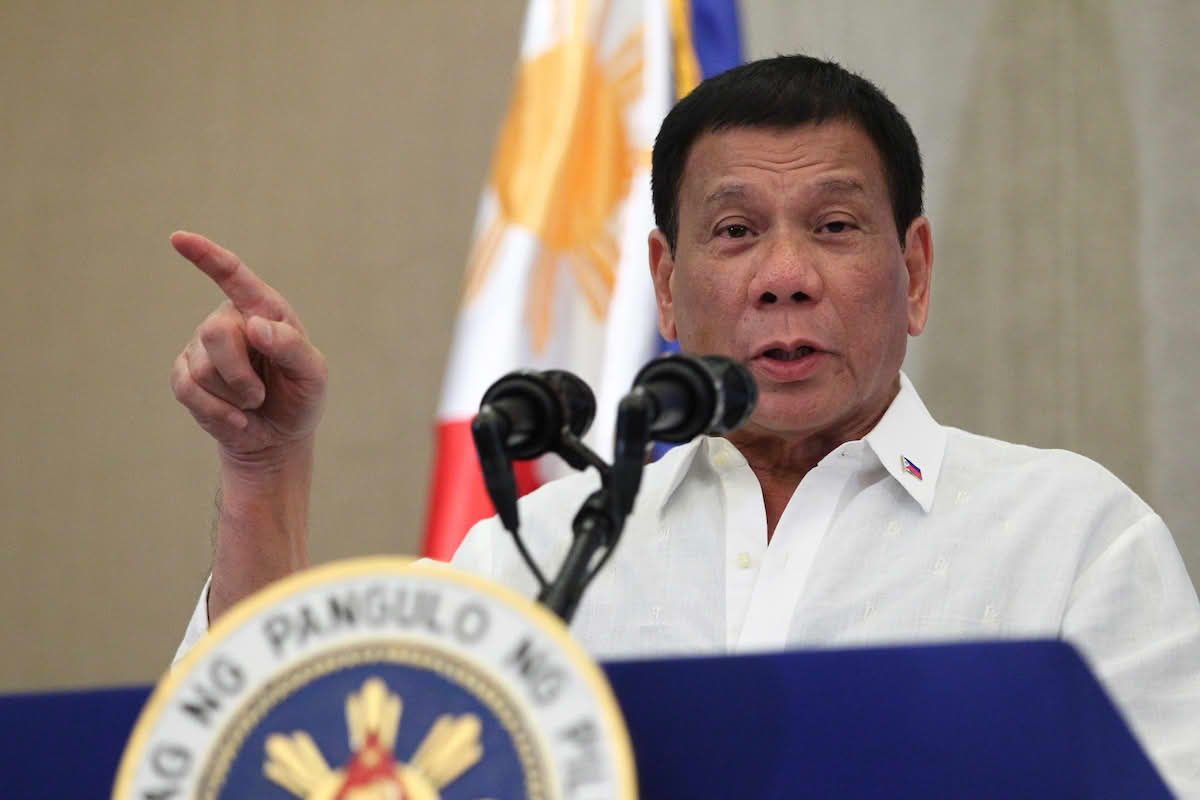
On 10 February 2025, the Office of the Prosecutor of the ICC applied for an arrest warrant against Duterte for the crimes against humanity of murder, torture, and rape. The ICC Pre-Trial Chamber I (“the Chamber”) assessed the material submitted by the Prosecution and found reasonable grounds to believe that Duterte is individually responsible as an indirect co-perpetrator for the crime against humanity of murder, allegedly committed in the Philippines between 1 November 2011 and 16 March 2019.
The warrant of arrest against Duterte was issued by the Chamber on 7 March 2025. On 12 March 2025, he was surrendered to the ICC after being arrested by the authorities of the Republic of the Philippines in accordance with the warrant of arrest.
The initial appearance of Mr. Duterte took place on 14 March 2025. He appeared in the hearing via video link, as authorized by the Chamber. On 8 September 2025, Pre-Trial Chamber I postponed the commencement of the confirmation hearing in the case, which had been initially scheduled to start on 23 September 2025. This was followed by a request from the defense of Duterte for an indefinite adjournment of the proceedings, alleging that he is not fit to stand trial, leading the majority of the Chamber to consider that a limited postponement of the hearing on the confirmation of charges was warranted to allow sufficient time to adjudicate the request and related matters.
The ICC said that should the Pre-Trial Chamber confirm the charge, it will then commit the case for trial before a Trial Chamber, which will conduct the subsequent phase of the proceedings: the trial itself.
The Pre-Trial Chamber has rejected the request of the defense team of former Philippine president Rodrigo Duterte for interim release. In its decision, released October 10, the Pre-Trial Chamber said Duterte’s detention “continues to remain necessary.”
The Chamber said Duterte’s continued detention is necessary to ensure his appearance at trial, since the latter, “from his initial appearance, contested his arrest and detention, qualifying it ‘as a pure and simple kidnapping.’”
Also mentioned to support its decision are the various speeches given by Duterte’s daughter, Vice President Sara Duterte, about the idea of “breaking Mr. Duterte out of the ICC Detention Centre,” and attempts to delegitimize the Court’s proceedings against Mr. Duterte, citing collusion between the Court and the government of the Philippines as well as the use of “fake witnesses.”
The decision was influenced by concerns that his release could pose risks, including potential escape, endangerment of witnesses, and the possibility of committing further crimes.
Duterte’s defense team has claimed that he is physically and mentally unfit to stand trial due to cognitive impairments. The chamber plans to conduct a separate assessment of his mental fitness to stand trial, indicating that the current medical findings do not negate the necessity of his detention. The International Criminal Court has cleared a key hurdle in the ongoing proceedings against detained former president Rodrigo Duterte, with the Pre-Trial Chamber I saying the ICC retains jurisdiction over the crimes against humanity case.
On October 24, the Chamber unanimously decided that the international tribunal has jurisdiction over the alleged crimes committed in the Philippines from Nov. 1, 2011, to March 17, 2019. The names “Dela Rosa” and “Aguirre” were mentioned in the heavily redacted Pre-Confirmation Brief submitted by the Office of the Prosecutor (OTP) dated Sept. 22 and made public on Sept. 23 in relation to the crimes against humanity charges filed against former president Rodrigo Duterte before the International Criminal Court (ICC).
Sen. Ronald dela Rosa, an incumbent member of the Philippine Senate, was the first Philippine National Police (PNP) chief during the Duterte administration and was the chief implementer of Duterte’s bloody war on drugs. “Dela Rosa promised that they would ‘immediately’ implement a ‘scaled up’ version of the Davao model. If someone fights back, they’ll die. If nobody fights back, we’ll make them fight back.’ ‘Produce blood. Instill fear’,” the document said.
Last year, the OTP tagged Dela Rosa and four other retired and current police officers as “suspects” for alleged involvement in the deaths of thousands of people in Duterte’s drug war. At the moment, the Philippines is rife with rumors that Dela Rosa has been issued a warrant of arrest by the ICC. Philippine Ombudsman Jesus Remulla fanned this speculation by confirming that an ICC warrant of arrest for Dela Rosa has already been issued. Senator Dela Rosa is now making himself scarce to avoid being arrested and sent to the ICC to face charges.
Lawyer Vitaliano Aguirre, Duterte’s first secretary at the Department of Justice, was quoted by the document as saying that the “new administration’s program was to do everything to stop drugs, crimes, and corruption—we will choose to kill these drug lords.”
The International Crime Court (ICC) weathered pressures from Duterte supporters in the Philippines and in its headquarters at The Hague, Netherlands. On October 1, 2025, the Philippine Senate (dominated by Duterte’s allies) passed a resolution asking the ICC to consider placing former president Rodrigo Duterte under house arrest on humanitarian grounds. In the Philippines, supporters of former president Rodrigo Duterte gathered in a show of unity and frustration over what they described as continued government silence regarding the latter’s situation abroad. During this time, at the Hague, noisy Duterte supporters held demonstrations calling for their leader to be repatriated to the Philippines.
A sophisticated network of fake social media accounts sprang to the impassioned defense of former Philippine President Rodrigo Duterte after he was sent to the International Criminal Court to face charges over his bloody drug war.
On the other hand, there is growing support for holding Duterte to account for his crimes at the ICC. The Duterte Panagutin Campaign Network was launched by human rights defenders and victims of Duterte’s bloody fake war against drugs to fight for justice and hold Duterte and cohorts accountable. Since its launching in November 2024, it has conducted information campaigns to counter fake news and narratives promoted by Duterte supporters. It has also organized protest actions to promote its advocacy.
On March 18, 2025, activists from various countries in Europe held a rally at the ICC to demand justice. The Duterte Panagutin Campaign Network – Europe was formed in the Hague, Netherlands, on Duterte’s 80th birthday on March 28, 2025. The network asserts that Duterte’s arrest is not the end of our struggle. For them, true justice means disarming and dismantling the entire system of impunity that enabled these atrocities to happen.
In the Philippines, on the same day, protestors also demonstrated, calling for justice for Duterte’s victims. On September 21 and 23 rallies were held at the ICC to demand justice for victims of Duterte’s anti-drugs campaign.
Duterte’s case at the ICC is a win for Filipinos fighting for justice and impacts the ICC’s global reputation.
Duterte’s arrest, detention, and trial at the ICC is a big achievement in the Filipinos’ fight for justice. Holding Duterte accountable for his crimes in the Philippines is impossible because of his power and influence in the government. His daughter, Sara Duterte (though facing serious corruption charges), is still the incumbent vice president, and the majority of members of the Senate are his allies.
Moreover, former Department of Justice (DOJ) Secretary Remulla admitted that “The cases that we are speaking about were filed by their families in the ICC because they could not get justice in the country…” The ICC has been firm in implementing its mandate, notwithstanding the legal antics of Duterte’s defense counsel, British-Israeli Nicholas Kaufman. (This is the same Kaufman who delivered Israel’s threat to ICC Prosecutor Karim Khan, who was then chief prosecutor on Duterte’s case, to back off from the Gaza case or “They will destroy you, and they will destroy the court.”)
Duterte’s case in the ICC is significant: he is the first Asian leader and a former president of the Philippines to be tried by the tribunal. As a close ally and client state of the U.S., it inspires a global democratic movement to fight for justice.
In a blatant display of U.S. exceptionalism and unilateralism, it imposed sanctions against the ICC because of the case against Netanyahu, and it does not want to be accountable for its crimes against humanity.
The United Nations is against US sanctions on ICC officials, which undermine the independence of the tribunal and justice for victims. The European Union is also critical of US sanctions against the ICC. “The ICC holds perpetrators of the world’s gravest crimes to account & gives victims a voice,” according to von der Leyen. “It must be free to act without pressure.”