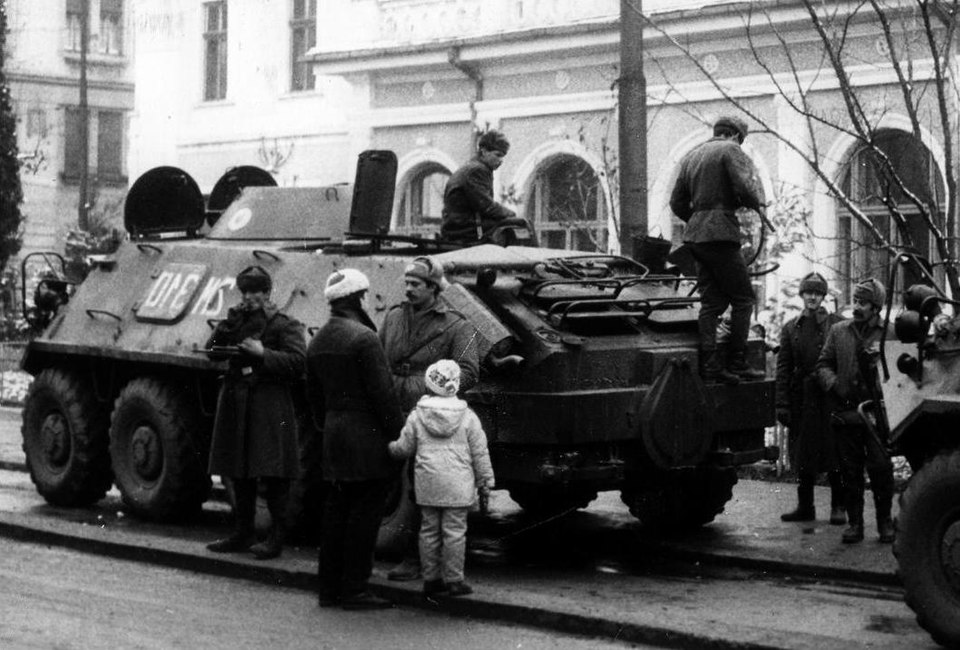
On Christmas Day 1989, Nicolae Ceaușescu, the president of the Socialist Republic of Romania, and his wife Elena were executed by an impromptu firing squad. Events had accelerated at breakneck speed in the previous ten days. After state forces opened fire on protesters against the eviction of a Hungarian pastor in Timișoara, Ceaușescu called a rally in Bucharest to reassert control. The crowd quickly became agitated and started chanting against the regime. The Ceaușescus fled the capital the next day, on December 22, but were quickly apprehended.
The Romanian Revolution, as these events would come to be known, is famous as the only 1989 regime change that involved bloodshed, with an estimated 700 to 1300 deaths. The killings came out of a nebulous violence that has still not been elucidated. More than half of the victims died after Ceaușescu’s capture, in clashes with “terrorists” whose identities remain a mystery.
The opacity of the fighting has led many Romanians to believe that the revolution should rather be considered a coup. That Romania’s post-1989 leaders overwhelmingly came from the nomenklatura has not helped dispel these suspicions. Former communist elites oversaw and profited from the privatization of Romania’s economy. Industries were dismantled and state services discontinued, causing millions to take exploitative jobs in Western Europe.
Despite the post-socialist disaster, there is little to romanticize about Ceaușescu’s Romania. After some early years of relative well-being and liberalization, his presidency became a personalist, tyrannical regime. The natalist abortion ban led to women’s deaths and to children growing up in abusive state orphanages, while the ambition to completely pay off the state’s external debts was successful only at the price of the utter immiseration of Romanians throughout the 1980s.
Today, Ceaușescu’s legacy is still disputed. Those who remember pre-1989 job and housing guarantees see him as the leader of a golden era. Neoliberals see him as a totalitarian devil whose legacy still holds Romania back. Far-right sympathizers, meanwhile, see him as the kind of patriarchal, nationalist authority needed today.
The trial’s recording, broadcast on the day of the execution, shows a confused old couple who cannot comprehend that anyone dares to judge them, but who slowly realize that they are facing their death. 36 years later, the video plays on Romanian TV every December for commentators to litigate political issues by using and abusing Ceaușescu’s ghost.