In July 2025, the vdää (the Association of Democratic Physicians) published a booklet called “Wir werden euch nicht helfen können” (“We will not be able to help you”). The title echoes a peace-movement slogan from the 1980s, used by medical professionals to warn the German public. They cautioned that, should the Cold War escalate into a full-scale nuclear confrontation, the health sector would be unable to help.
The booklet arrives as Germany takes a Zeitenwende, with politicians calling for a more war-capable society. The German government intends to reshape the healthcare system for military purposes, while cloaking its militaristic policies in euphemisms such as “resilience,” “health security,” or “ZMZ” (“civil-military cooperation”).
According to the vdää, these policies would divert resources from civilian care, tie medicine to warfare, and undermine ethical medical principles. The association’s core message is simple: the healthcare system must not become an arm of the military. Physicians and health workers should resist being drawn into war preparations and instead focus on promoting peace, diplomacy, and social justice.
These concerns were reiterated at a recent congress organized by the vdää, the Gesundheitspolitisches Forum. A workshop on the militarization of the health sector was among the most attended events.
The urgency felt by health personnel is understandable. Health workers are among the first professional groups on the front lines—both in peacetime and in war operations.
Preparing hospitals for war
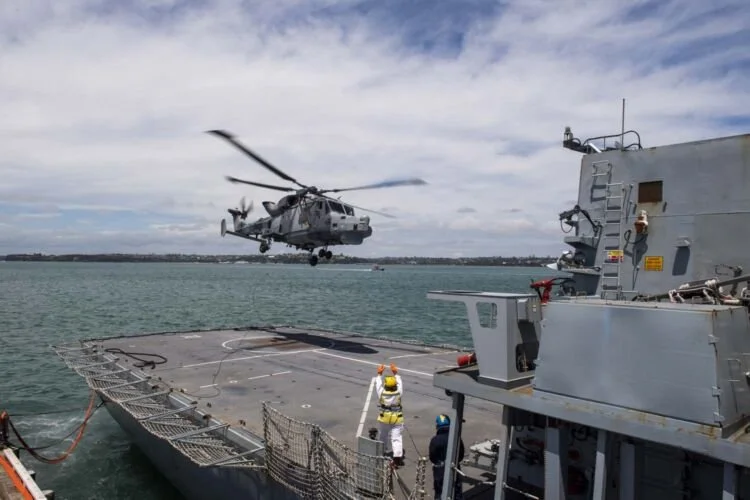
At the end of August, two clinics in Rostock conducted a military exercise, transporting fake war casualties from the harbor to hospital grounds. The drill was intended to demonstrate how cooperation between the Bundeswehr and the health sector could work.
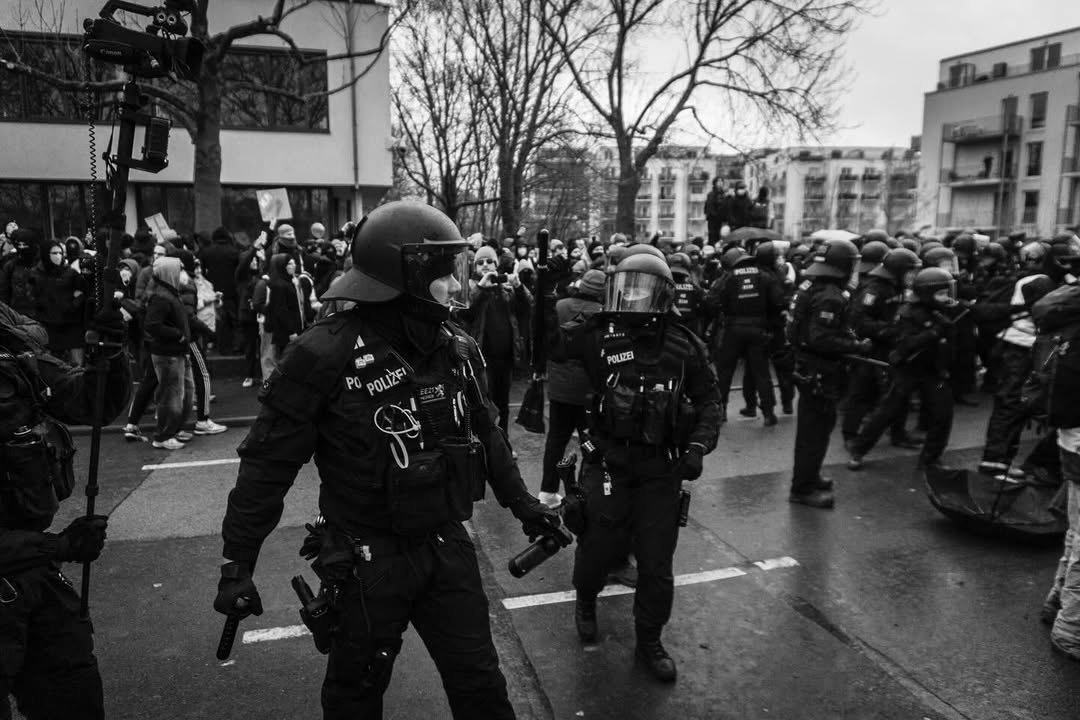
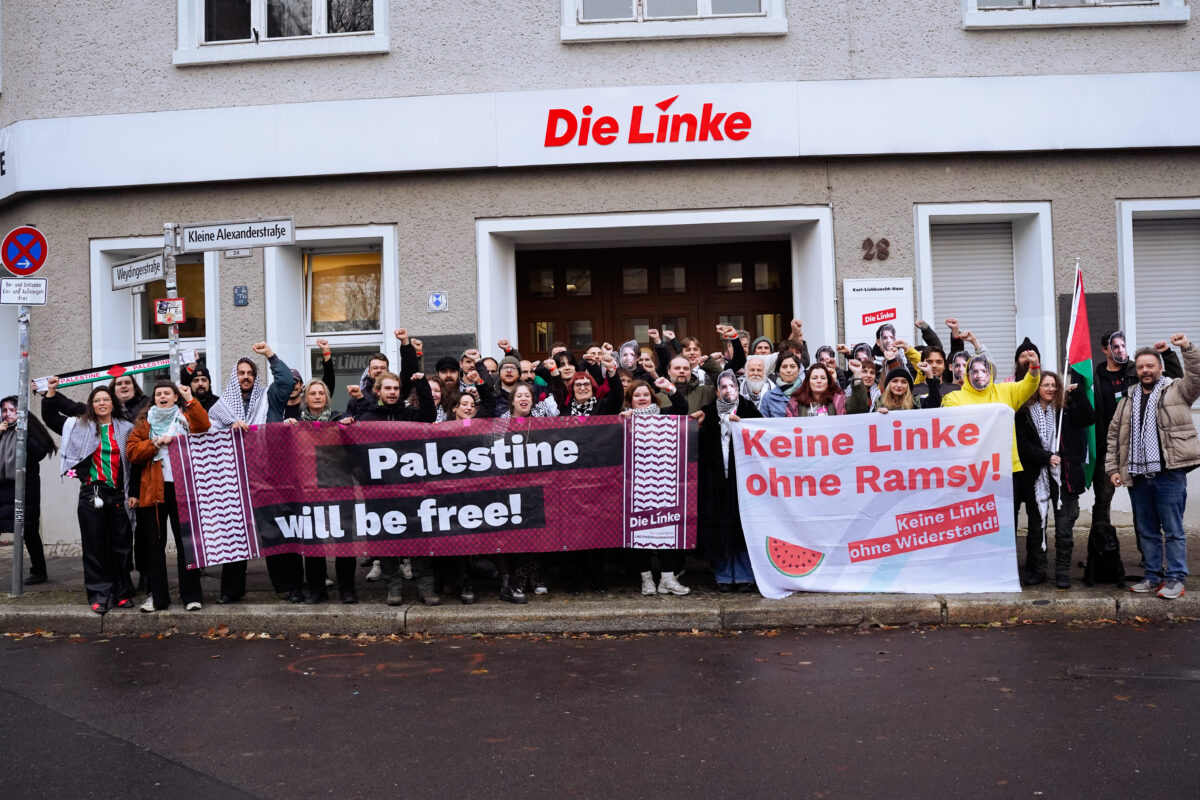
In November, Bundeswehr Colonel Zimmermann was scheduled to speak at the symposium “Civil Emergency and Rescue Medicine in Civil Protection” at the Charité in Berlin. He was uninvited after protests were announced, including by the IPPNW (International Physicians for the Prevention of Nuclear War). But this small victory should not distract from the bigger picture: the government remains determined to enmesh the military in the health system.
In July, the Berliner Senat presented its plan „Zivile Verteidigung Krankenhäuser“ (Civil Defense Hospitals). This plan, drafted with the help of the Bundeswehr, outlines how hospitals will need to prepare for a crisis, and especially war.
The vdää has expressed concerns about several aspects of the plan: a shift from “individual medicine to disaster medicine”; discussions about allowing “the severely injured or so-called ‘hopeless’ patients” to die; and the transfer of extensive powers in hospitals to the military.
Medicine for war vs Medicine for peace
There are many troubling issues to consider if a state integrates its military and health apparatus. Chief among them is how this integration will transform the way civilians are treated and cared for.
Medicine for war is very different from medicine for peace. Wartime medicine treats different injuries and uses different techniques. Emergency procedures used to treat high-velocity gunshot wounds are not necessarily applicable to injuries sustained in civilian life (such as trauma suffered after a bike accident for example). If more training time is devoted to war medicine, how does this affect the capability of health workers in peacetime? In the vdää booklet, Bernhard Winter reports on the annual Symposium on Civil–Military Cooperation. There, a demand was made to grant military doctors preferential access to certain surgical procedures over civilian doctors during their specialist training.
Furthermore, triage rules differ significantly between peacetime and wartime. In civilian medicine, triage—the process of assessing and prioritizing patients—is aimed at providing the most effective treatment for all patients in need, to save the greatest number of lives. In wartime, priority is given to soldiers who can be returned to duty quickly, in order to maximize military effectiveness.
A civil–military collaboration, as it is currently being pushed, entails the subordination of civilian structures to military purposes. This also implies a shift in priorities. In the event of war, even if it does not occur on German soil, it becomes likely that injured or sick civilians will be deprioritized in favour of German or NATO soldiers.
“Modern wars depend on the fact that large numbers of wounded soldiers are sent back into the firing line after they have received medical treatment. This means that the general aim of healthcare is inverted. This is a concept known as ‘reverse triage’, meaning that instead of our usual way of triage, where we assess a patient and treat those most in need of healthcare first, instead we will have to start looking for the least injured military personnel in order to treat them as a priority, because they are needed back at the frontline.”
Vital Signs, Against the militarisation of the health sector
When the health sector is subordinated to military objectives, it undergoes profound transformation. Training in specialties relevant to wartime takes precedence over training for civilian medicine, while large-scale exercises focus less on more likely scenarios—such as a pandemic—and more on a war that may never happen. Even infrastructure planning is impacted: some hospitals needed for civilian care might close, while hospitals that are connected to transport axes envisioned for NATO operations might remain open or be newly built.
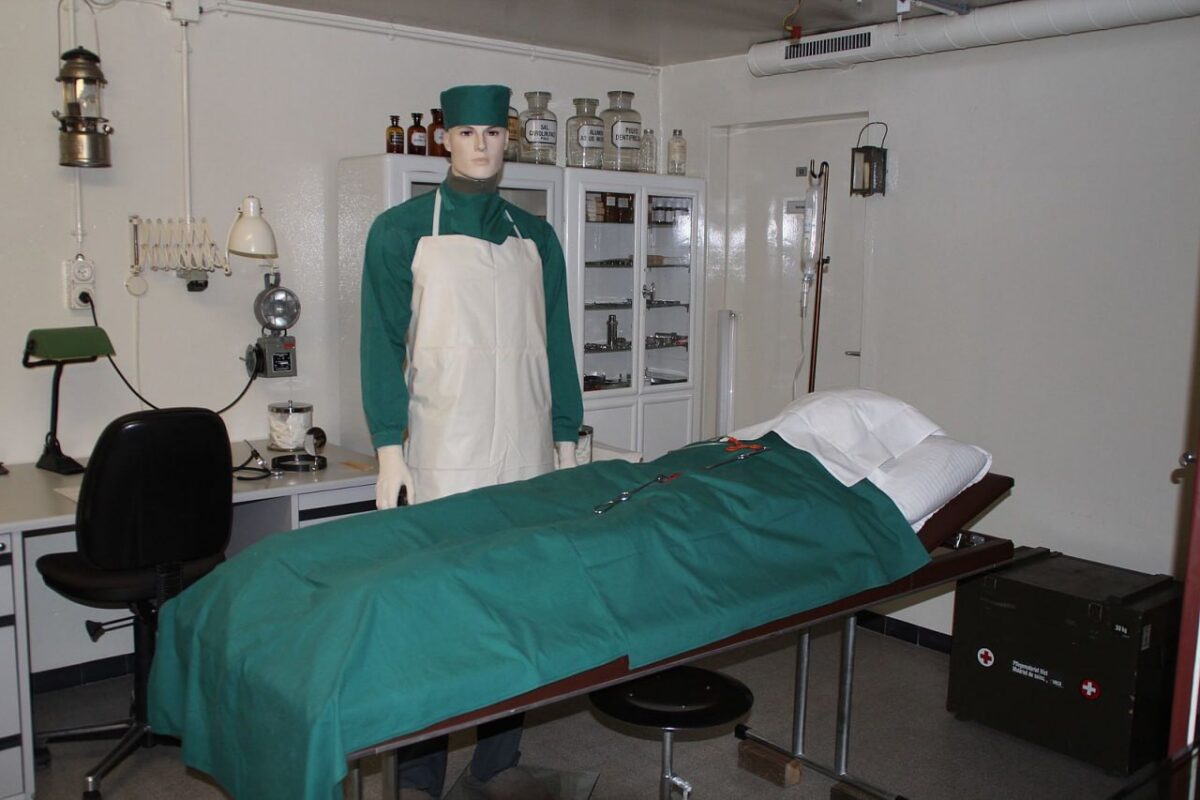
There have even been talks about building underground hospitals. Tino Sorg, the CDU/CSU’s spokesperson for health policy, told die Welt:
“For the first time since the Cold War, our healthcare system must prepare itself again for an emergency. This will also have to involve structural changes. We could learn from Israel, where hospitals and other civilian structures are relocated underground when necessary in order to be protected from airstrikes”.
Changing the mindset of the population
Recently, the Future Forum for Public Security published the “Green Paper on Civil-Military Cooperation 4.0”. Based on a hypothetical conflict between NATO and Russia in 2030, the document outlines how a comprehensive civil-military cooperation could work. The healthcare system is seen as a key component of this strategy: ensuring medical capacity and war-readiness, but also tasked with upholding the morale of society.
No war can be fought without the cooperation of the health sector. Arguably, health workers always operate, to some degree, in service of the powers in place. At the vdää congress, Debora Darabi reminded the audience that, in a capitalist society, the health system facilitates the reproduction of capital. For example, by enabling workers to return to work after an injury. This unholy cooperation becomes even more pronounced in the context of war, as health workers are essential for restoring wounded soldiers and maintaining a war-ready population.
Several other speakers at the congress pointed out that the talk of “war-ready” hospitals is also a way of winning over the German population. It gives the illusion that, in the event of war, soldiers and civilians will be cared for by a functioning system prepared for every crisis. This makes war seem more manageable and winnable. The cooperation of the health sector, then, helps the population to swallow the bitter pill of re-militarisation.
But just as in the 1980s, many health workers say that if war comes “we will not be able to help you”.
More money for war is less money for peace
It is very clear that more money for war is less money for social causes.
Recently, the president of the IFO (Institute for Economic Research), Clemens Fuest, mused about the costs of militarization on a talk show, saying:
“Guns and butter — it would be nice if that were possible, but that’s a land of milk and honey; it doesn’t work.”
This phrase echoes Rudolf Heß, deputy Führer to Adolf Hitler, who declared in 1936: »Kanonen statt Butter.« (Guns instead of butter).
War is never just a single moment in time. Soldiers don’t simply become IT workers and forget what they went through. Families don’t forget the loved ones they lost. Weapons don’t simply disappear. Even if the war never breaks out, the country’s infrastructure has already been reshaped. The arms industry has been strengthened and now relies on actual warfare, at home or abroad. Weapons must be used, or sold to foreign nations waging their own wars. Health workers become less effective at treating civilians because they have spent more time learning to treat soldiers. Hospitals in populated areas have been closed, while new hospitals lie empty along highways to a front that will never see any combat.