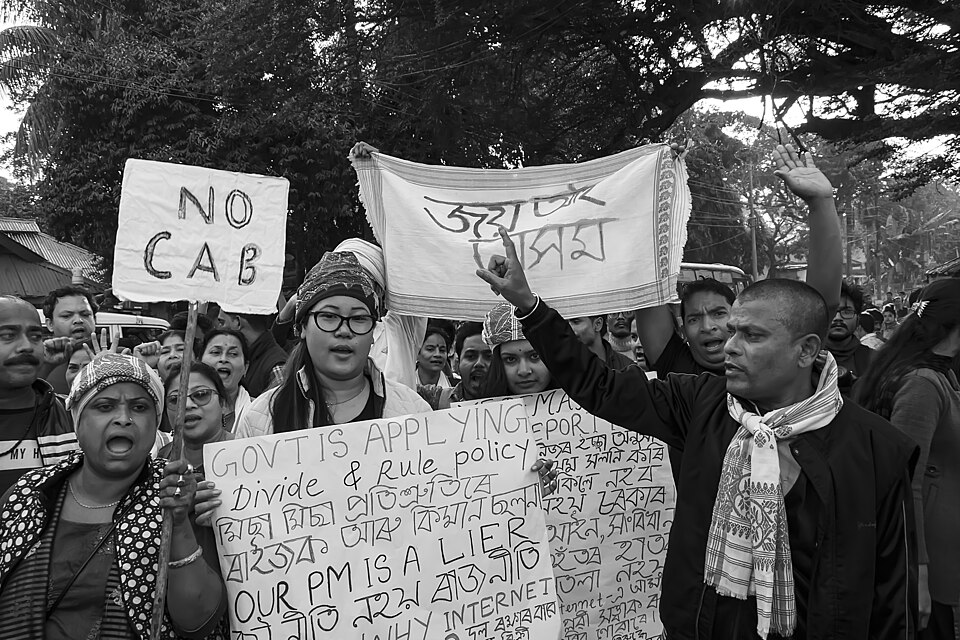
In this week in 2019, the Citizenship Amendment Act (CAA) was passed through both houses of the Indian Parliament amidst strong backlash in the capital, New Delhi. Taken together with the proposed National Register of Citizens (NRC), the Act is widely seen as a direct contravention of the “secular” ideals laid out in the Indian Constitution, as it makes it particularly difficult for Muslim refugees and asylum seekers to obtain Indian citizenship.
The bill was announced in August 2019 alongside the infamous abrogation of Articles 370 and 35A, which had previously accorded special domicile powers to Kashmir, a region militarily occupied by the Indian state since independence. The events of August 2019 acted as a lightning rod for Hindutva rhetoric to be put into legislative action by the ruling BJP, which had once again secured a parliamentary majority only a few months earlier.
The CAA guarantees citizenship to refugees from Afghanistan, Pakistan and Bangladesh if they arrived in India by 2014, with eligible minorities limited to Hindus, Sikhs, Buddhists, Jains, Parsis and Christians. The deliberate omission of Muslims—who constitute the majority of refugees arriving from these countries—marks the first time religion was explicitly used as a criterion for Indian citizenship. The codified discrimination becomes clearer when considered alongside the NRC: a project the government still intends to implement. The NRC would centrally filter out undocumented residents, and since no single document (not even a passport) definitively proves Indian citizenship, applying the CAA to NRC “defaulters” would theoretically result in a disproportionate expulsion of underprivileged Muslims.
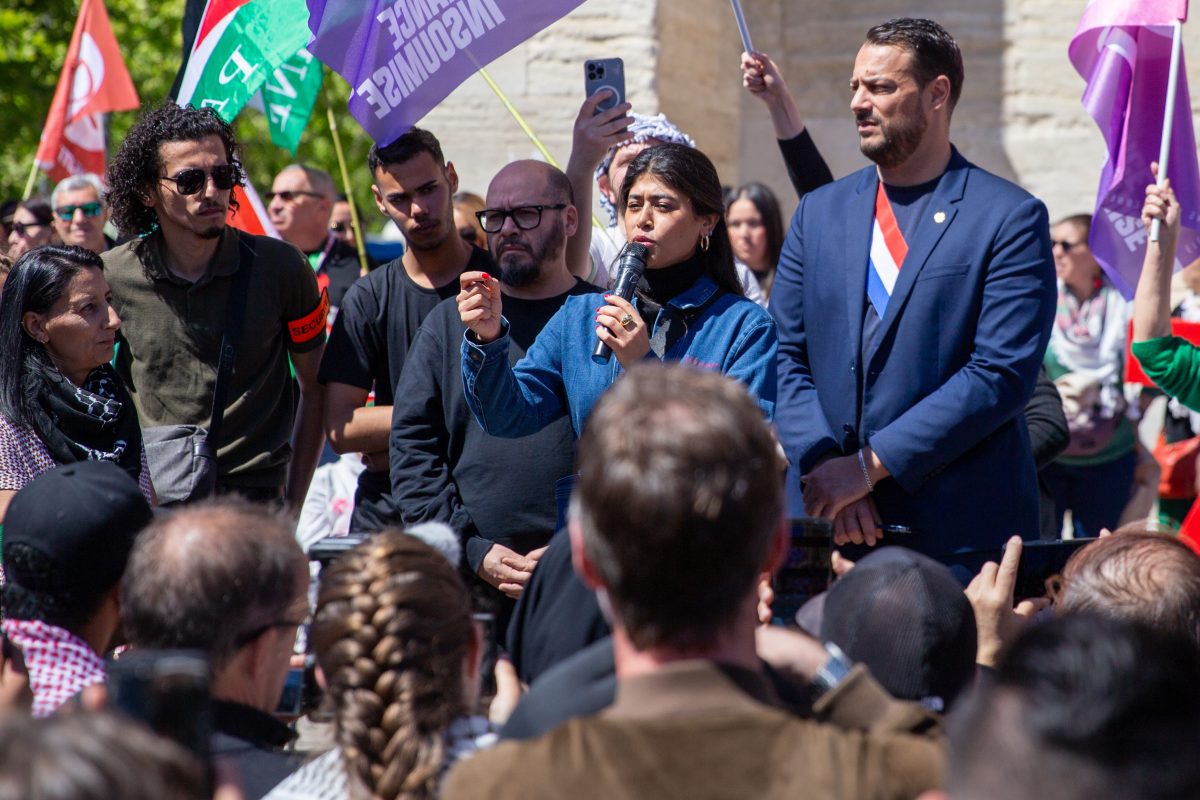
The CAA and the proposed NRC sparked a wave of protests across India, with New Delhi at the forefront. The protests were led by students and the working class. A significant face of the Delhi protests were Muslim women from Shaheen Bagh, who were relentlessly maligned by the media and the government, including Prime Minister Narendra Modi. State repression followed swiftly, manifesting in internet shutdowns, army deployment, university raids, arrests—and ultimately contributing to the North-East Delhi riots of February 2020. The protests were unfortunately curtailed in March 2020 as COVID-19 restrictions came into force, but their spirit shook the state.
A nationwide NRC is yet to be conducted, and if it ever is, it will surely be met with mass resistance.