Editor’s Note: In December, 2023, taz was supposed to publish this article by Nadja Vancauwenberghe. Nadja has submitted the article to taz twice. The second time the Berlin editorial board reached out, and expressly asked for it, the journalist even called her to say that they would like to publish it ASAP.
The article was never published. Instead, Nadja received a message saying: “we were agreeing with you on the same points, but we think right now it is not a good move to publish it.” Two years on, it appears that they have still not found the right time.
Although over 80% of Germans have consistently opposed Germany sending weapons to Israel, and increasing numbers of people have demonstrated for Palestine, the press is still playing a craven role. As an attempt to counter this, we are publishing Nadja’s article on theleftberlin.com
As a foreign Berlinerin with 20-plus years’ experience reporting about this city (I founded Exberliner magazine and ran its editorial for 21 years), I’m currently finding Germany increasingly difficult to understand. The German government’s zeal to support Israel “unconditionally” and oppose any ceasefire is one thing. But what is more disturbing: this mind-boggling blanket pro-Israel consensus in society at large, and among my colleagues in the German media.
It’s not that the debate is polarised, as it is in my native France (where a conservative ex-foreign minister has joined the radical Left to condemn Israel, and toxic domestic politics have hijacked the issue). Here, there’s just NO debate. Friends and colleagues whom I’d usually have an open and rational conversation with — including on the once ‘progressive’ Left — won’t discuss anything past Israel’s “right to self defence”.
If you dispute the disproportionate way Netanyhu has been retaliating to the October 7th Hamas attacks, or show empathy for the deaths in Gaza — or if you just point to the unsustainability for Israel’s long-term security of a policy based on military violence, they end a conversation that will never happen with an opaque but authoritative: “It’s complicated,” before pleading the amount of historical knowledge one would have to acquire in order to express an informed opinion. “You know, there’s too much context,” concluded my German friend as an explanation for why she wouldn’t dream of joining a pro-cease-fire Demo with her many international and arabic friends.
But how “complicated” is it, really, to acknowledge that killing 18,000 Palestinians, mostly civilians, including a huge proportion of children and babies, is outrageously wrong and should stop? (In two months, Netanyahu has managed to kill twice as many civilians as Putin did in 22 months, feeding accusations elsewhere in the world about double standards.)
What “context” does one need to oppose the indiscriminate bombing of hospitals, schools and refugee camps, the murder of at least 70 journalists (most recently Al Jazeera reporter Samer Abudaqa) and over 130 UN agencies workers, the blockade of food, water, medicine, fuel, shelter and other humanitarian assistance – all acts the UN defines as war crimes and “likely genocide in the making”?
And what “context” did my German friend mean anyway? Could it be Israel’s violation of international law with its settlements in the occupied West Bank and the subsequent desperation of a people living in ghetto-like conditions and subjected to an Apartheid regime on their own land? This is not my opinion, by the way, but the unequivocal verdict of the UN’s rapporteur on Palestine last spring. But what does the UN know? Or Udi Raz, the Jewish tour guide at the Jewish Museum of Berlin, who got fired for using the “A-word” to describe the situation in her native country. She’s from Haifa. But Germany knows better. Here using words such as “genocide”, “ghetto” or “appartheid” is considered surreptitiously “antisemitic”.
Antisemitism: hidden and everywhere
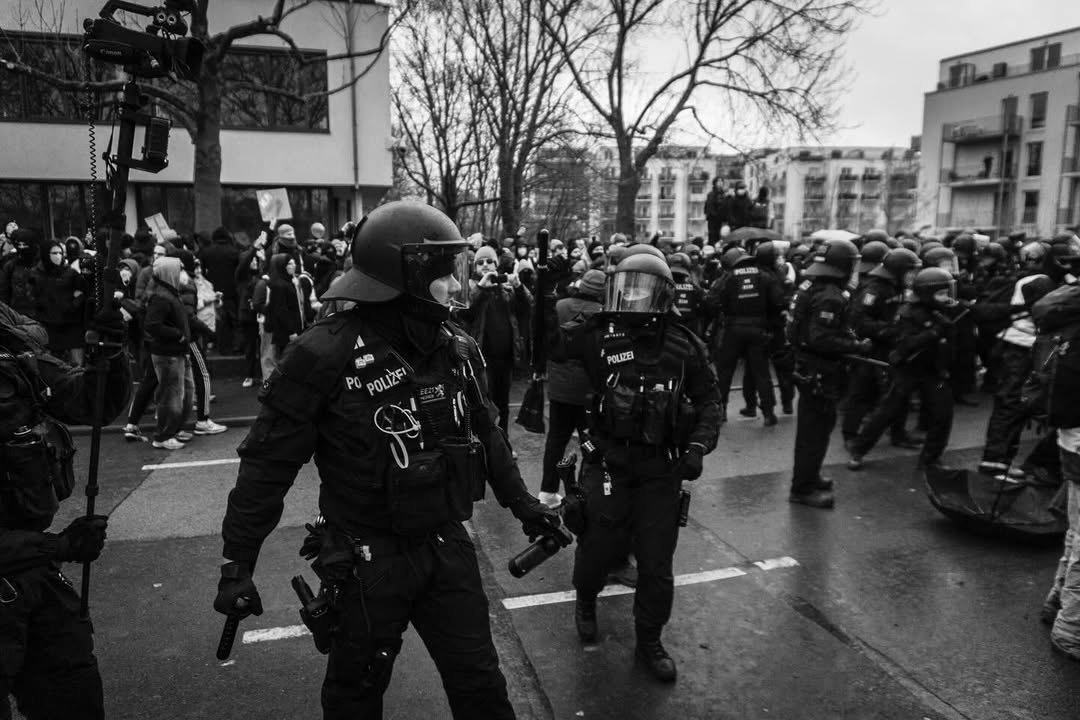
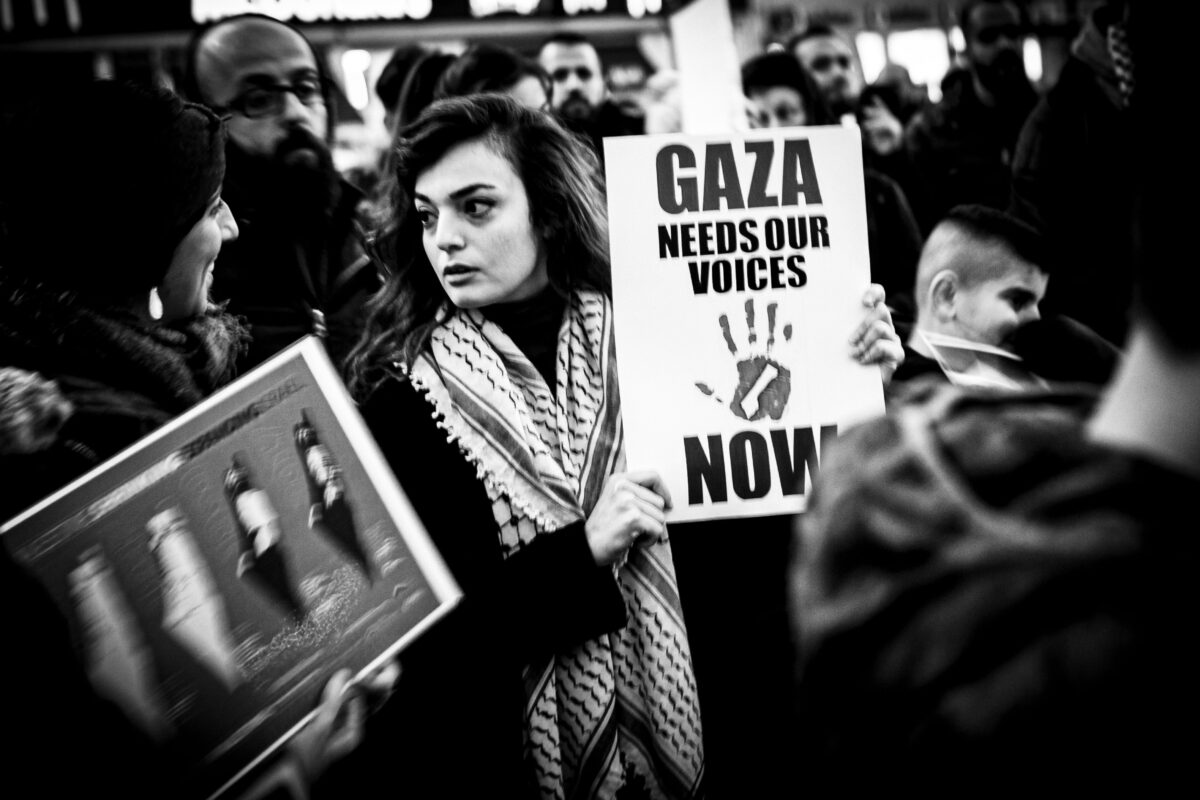
For the past two months the German media has been filled with articles about antisemitism. Kultursenator Joe Chialo’s resolve to crack down not only on “Jede Form von Antisemitismus” but “jede versteckte Form von Antisemitismus” (“Every form of antisemitism, including hidden forms of antisemitism”) has become the editorial order of the day, no matter how politically slippery the resolve to fight a “hidden” and loosely defined opinion crime. But, dutiful, the German press set itself to track down those hidden “antisemites” and found them everywhere you wouldn’t suspect: in the climate movement, among those art-scene interlopers, and of course all over the left-wing post-colonial and pro-Palestinian demonstrations (filled with violent and dangerous “Islamists”, hence a good reason to ban them or restrict them, which can only backfire considering Berlin has Europe’s largest Palestinian diaspora).
Only in Germany could the “serious” media get so worked up about Greta Thunberg’s octopus toy and its “hidden antisemitic message” — and launch a massive character assassination campaign on this former media darling. By German standards, not only are Greta and the UN antisemitic, but also quite a few Jews in town — like the “Jüdische Stimme für gerechten Frieden in Nahost”. Working with Jewish Israel-critics can even cost you public funding as the Oyoun Cultural Centre found out — all in the name of Germany’s fight against antisemitism.
This has been going hand in hand with editors’ inclination to frame any news item in support of the antisemitism narrative. Recently a survey about intolerance — sexism, homo/transphobia, racism and above all Muslimophobia among Berliners ran in a local daily under the misleading headline “Antisemitism on the rise in Berlin!”, yet the findings showed much lower negative attitudes towards Jews compared to Arabs and Muslims (a staggering 54 percent consider Islam backward and incapable of adapting).
Selective solidarity
In these McCarthyist conditions, exhibiting “solidarity” has become an imperative. Solidarity with Israel and with Jews that is, in shocking disregard of the 18,000 Palestinians who’ve died since October 7. Take the open letter by over 50 of Germany and Austria’s leading filmmakers of the German Film association: published after a full month of bombing of Palestinians in Gaza: it doesn’t include a single compassionate word for the Palestinians. “Not the letter we needed” complained the Jewish film academic Marc Siegel who made a strong case for “those of us (Jews) who view the greatest threat to our security in the stifling of public expression of solidarity with Palestine; the silencing of debate and discussion about the aberrations of German memory culture…”.
Recently, the Berlin-based Syrian-Palestinian poet Ghayath Almadhoun shared his sadness on how not a single fellow German writer protested the cancellation of his latest book’s release event at the Haus für Poesie. “Only my Jewish friends” showed solidarity, he said.
Another shocking example was when last Sunday I accompanied a friend to Sunday service in a pretty presbyterian church on the western edge of Berlin; there, a young, friendly minister dedicated his sermon to “victims of war. All victims of war,” he made the emphasis with cherubic sincerity. “The innocent victims in Ukraine, but let us not forget the Syrian people.” Obviously there were no more topical examples he could come up with. Palestinians were never mentioned.
No dissident Jews allowed
In Germany, Jewish militants from organisations like Jewish Voice for Peace, and the Jüdische Stimme für gerechten Frieden in Nahost — who are campaigning together with Palestinians for a cease-fire and a political solution that respects the rights of all peoples living there — are considered ‘antisemitic’ and boycotted by the media.
“They don’t want Jews to criticise Israel,” says Iris Hefets. The Berlin psychotherapist and Israeli Jewish activist was recently disinvited from a debate on Deutschland Rundfunk, “They’re scared of losing their job,” she says about journalists here. “I was interviewed by the media from Korea, France, Greece, all over! Here, we’re boycotted.” Udi Raz met a similar fate: his interview with Zeit never got published. Both get invited to panels and talks all over — not here.
Few local dissident Jewish voices managed to break the silence. The famous US-German author Deborah Feldman did and when she complained that anyone who criticises the German response to the Hamas attack is being silenced and discredited, that is pretty much what happened to her — her voice replaced “by the louder ones of Germans whose Holocaust-guilt complexes cause them to fetishise Jewishness to the point of obsessive-compulsive embodiment.”
Meanwhile the foreign media has started taking notice. Masha Gessen’s takedown on Germany’s memory culture “gone haywire” in The New Yorker in December was read, shared and commented all over. Not by my German colleagues. Or if they did, it was to dismiss.
Zooming out: International Isolation and discredit
This failure of the ‘fourth estate’ in its mission to impartially inform is a danger for a functioning democracy. If we, journalists, aren’t here to do our job — see through the ideological fog and raise the alarm, who will?
Of course there are (few) exceptions. Colleagues like taz’s Daniel Bax have clearly and articulately exposed the reality of Israel’s actions in Gaza and Germany’s guilty support of them. Süddeutsche Zeitung’s Sonja Zekri has cautiously but surely brought up the sore issues and given a platform to those dissentive voices silenced or dismissed in other media (such as Deborah Feldman and Mascha Gessen). But this only reinforces my feeling of perplexity: if they can analyse the situation so well, why aren’t their colleagues able to do the same?
And I wonder: do the Germans read the foreign press? Do they have access to social media, where Israel’s war crimes are broadcasted on a quasi live basis? Do they realise how isolated Germany is in its obstinate support of Israel? What an unpopular minority position when four out of five countries in the world voted in favour of an immediate humanitarian ceasefire in Gaza at the UN General Assembly in November?
While mainstream news outlets from CNN to Al Jazeera, dailies from The New York Times to Ha’aretz report about Israeli’s crimes, the German media’s (self) censorship
is not just unprofessional and damaging for journalism credibility. This inability to see beyond one’s own historical circumstances and to adequately respond to a tragedy in the making ultimately damages Germany’s credibility on the world stage.
At home: a dangerous conflation
Meanwhile, under this blanket ideological conformism, a realignment of alliances is underway: in a staggering reversal of political allegiances and traditions, the far-right has strategically positioned itself as a champion of the Jews, while pro-Palestinian leftists are vilified as supportive of terrorism or antisemites — a well-known trope of the Springer Right that seems to have infected the progressive media. In a country obsessed with the Holocaust, being castigated as “antisemitic” is a sentence to political death. Meanwhile the Alternative for Germany (AfD) has jumped on the bandwagon as an unconditional champion of Israel — in line with the rest of the German political establishment, including the governing Social Democrats and the Greens. Here, like everywhere in Europe, the populist far-right is buying itself a new respectability over its performative fight against antisemitism. The risk of trivialising antisemitism is real — as Europe as a whole, and this country of all places, seem increasingly happy to adopt the AFD’s notion of “imported antisemitism” to advance an anti-immigrant agenda.
There’s no shortage of eminent voices including among Jewish Holocaust scholars warning us of the dangers of this weaponisation of the Jewish cause; for Israelis and their future; and for our democracies.