Last weekend, 50,000 people gathered in Gießen, a German town north of Frankfurt, to protest against the Alternative für Deutschland (AfD). The far-right party was trying to found a new youth organization, “Generation Deutschland,” after the previous one, “Junge Alternative,” had been ruled extremist by the domestic intelligence service.
Starting in the early morning, antifascists set up 19 blockades on all the roads leading into Gießen. The conference, scheduled for 10am, could only start after noon, with just a fraction of the 2,000 delegates in the hall. The meeting could only take place thanks to vast resources provided by the state apparatus.
Police violence
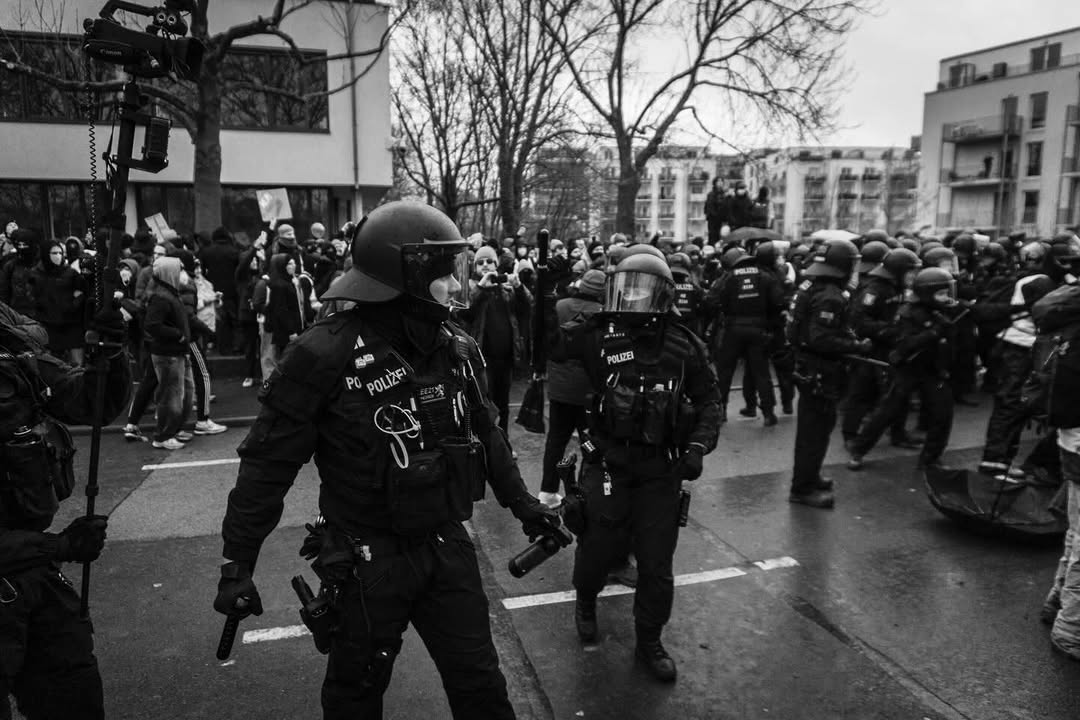
AfD leaders like Alice Weidel and Timo Chrupalla were brought in with a massive police convoy, as if they were foreign dignitaries. The cops not only rolled out the red carpet for the Far Right—they beat a path through the blockades for them. Police attacked demonstrators with pepper spray, water cannons, and baton charges.
The bourgeois media repeated whatever ridiculous claims the cops made, such as: “more than 50 injured officers.” The conservative interior minister of the state of Hesse reported that numerous police suffered “broken hands,” making it sound like they injured themselves while punching people. His boss, the Hessian prime minister Boris Rhein (CDU), noted, without evidence, that there were “a thousand demonstrators prepared for violence.” The German interior minister Alexander Dobrindt (CSU) said there is “no basic right that justifies violent action against our security forces,” again without evidence that such a thing happened.
Anyone with social media, meanwhile, could watch endless scenes of police violence, such as heavily armed cops racing down the highway to beat people peacefully forming a blockade.
Rechtsruck
“Generation Deutschland” is supposed to be more professional than its predecessor, but it is no less racist or authoritarian. The main change is organizational: the new youth group will be a component part of the AfD, rather than an independent association, making it easier for the party leadership to control.
From the stage in Gießen, far-right youth leaders called for “deportations, deportations, deportations”—or more professionally, for “remigration,” which means the same thing. Jean-Pascal Hohm, elected leader of the youth wing, maintains close contacts to the “New Right,” figures like Götz Kubitschek and the Identitarian Movement, who form a link between the AfD and full-on Nazi groups.
But it’s not only the AfD and its youth that are radicalizing. The main parties of the German bourgeoisie are all in fundamental agreement that the way to fight the AfD is to adopt most of its demands. So while chancellor Friedrich Merz (CDU) says that the AfD is antidemocratic, he is implementing the AfD’s proposals for closed borders and mass deportations.
Merz’s rearmament programs — with over a trillion euros for new weapons in the next decade, paid for by cutting funding for health care, education, and pensions — are a stimulus program for the Far Right. This isn’t just about the huge number of Nazis in the Bundeswehr, or the huge number of army officers in the AfD. Fundamentally, the militarization of society will strengthen the most authoritarian factions. As social services deteriorate, racist demagogues will have an easy time blaming “Ausländer” for crumbling schools (this is shown not just by German history, but also by recent studies).
The unprecedented repression against the Palestine solidarity movement, undermining longstanding democratic norms, paved the way for the violence in Gießen. The police could have decided that the violence needed to facilitate the AfD meeting was not “proportional”—but thanks to pro-Zionist Staatsräson (reason of state), police violence is more accepted that at any time in decades.
Hope
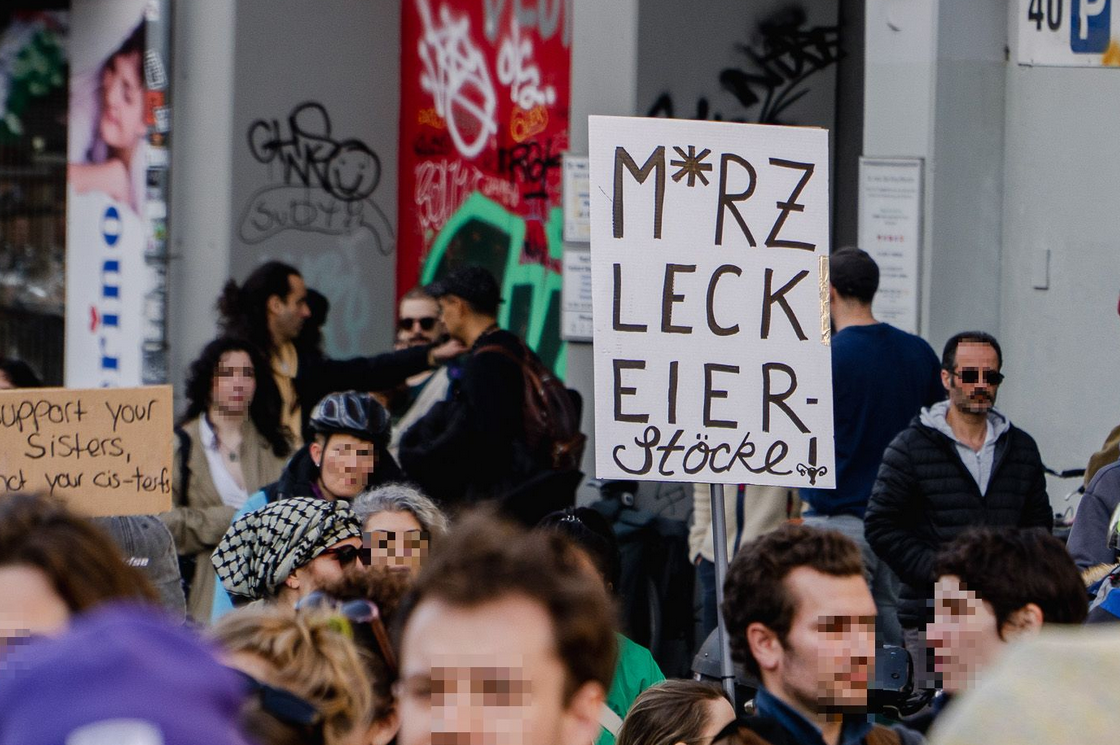
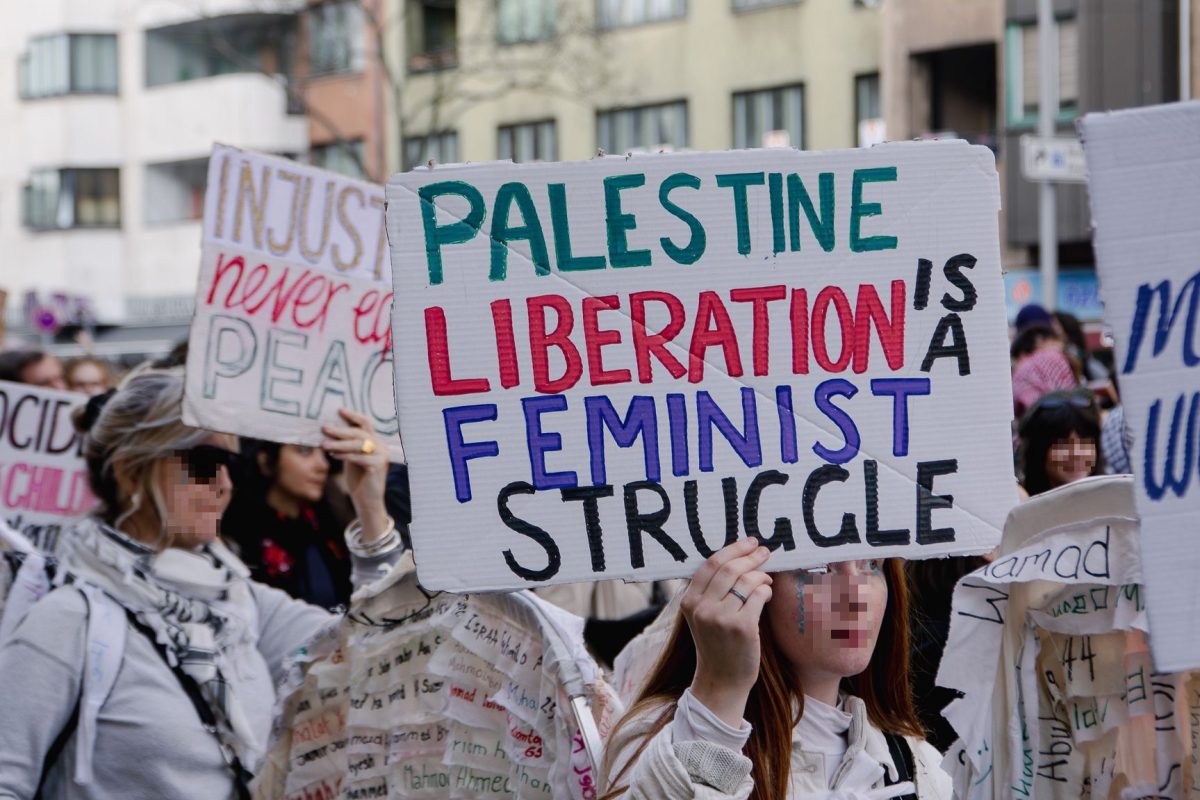
Yet the images from Gießen show there is an alternative to the ruling class’s shift to the right. We don’t see young people adopting far-right and fascist ideas. Instead of a “Generation Deutschland” longing for a white homeland, we instead saw a “Generation Antifa” putting their bodies on the line to stop the Far Right. (The gender divide was hard to overlook too: the AfD meeting was an almost entirely male affair, while women and queers outnumbered at the blockades.)
Better yet, we see a “Generation Class Struggle”: there were lots of workers and unions in the protests in Gießen, which drew the ire of AfD leaders and right-wing publications. They like to present themselves as a party of “little guys,” but in reality, billionaires make up the backbone of the Far Right.
Young people in Gießen showed that we are the ones who can stop the AfD. Politicians of the “extreme center” claim to oppose the AfD even as they support genocide, attack our living standards, and prepare for new wars. Government policies are grist to the Far Right’s mill. It’s only by fighting against militarism and against the authoritarian turn that we can stop the AfD.
Red Flag is a weekly opinion column on Berlin politics that Nathaniel has been writing since 2020. After moving through different homes, it now appears at The Left Berlin.