Rap star Nicki Minaj officially joined the ranks of MAGA during Turning Point USA’s America Fest convention. Accompanying Charlie Kirk’s widow Erika onstage, she heaped extravagant praise upon President Donald Trump and Vice President JD Vance. Not so long ago, Minaj was heartily critical of Trump, particularly in response to his attitude towards immigrants; then, during the pandemic, she began spouting anti-vaccination rhetoric—an indicator for the descent into an alt-right grifting career. While Minaj following this path isn’t totally surprising, listening to her dub Trump as a “dashing, handsome […] role model” was not on my 2025 Bingo Card.
Many online have—probably accurately—designated this as Certified Broke Behavior. Some have posited that she’s cosying up to the Tangerine Man in the hopes he will pardon her husband for crimes including attempted rape and failure to register as a sex offender. It’s shudder-inducing to watch anyone fawn over Trump, and the sheer transparency of it is cringeworthy. Even worse is that he laps it up. Trump, a man who ought to operate with a modicum of class and decency and sophistication—as any President should—preens and poses and rewards loyalty of any kind with oily words and metaphorical head-pats. He doesn’t even care if loyalty and praise stems from an authentic place. What he expects is a bend of the knee and a toe of the line. Bend to his power and submit to his regime, and you’re in with MAGA.
In 2025 the topic of celebrity endorsement was dwelled-on with vigor. Some consider it to be the duty of the rich and famous: their privilege and exposure give them the unique power to step to the government in a tangible way. Others push back against this, insisting that pop stars and actors should stick to their own sphere and restrain themselves from attempting to sway the political landscape. Taylor Swift received both criticism and defence when she did not speak out against the official White House Tiktok using one of her new songs for the United States Immigration and Custom Enforcement (ICE) agency. The anger towards her silence was exacerbated by the fact that younger pop girls Olivia Rodrigo and Sabrina Carpenter both swiftly and angrily denounced the usage of their art for such a cause. Be it complacency or a lesson in emotional intelligence, the incident drove an extra-charged train of discourse through the planes of the entertainment industry’s overlap with politics.
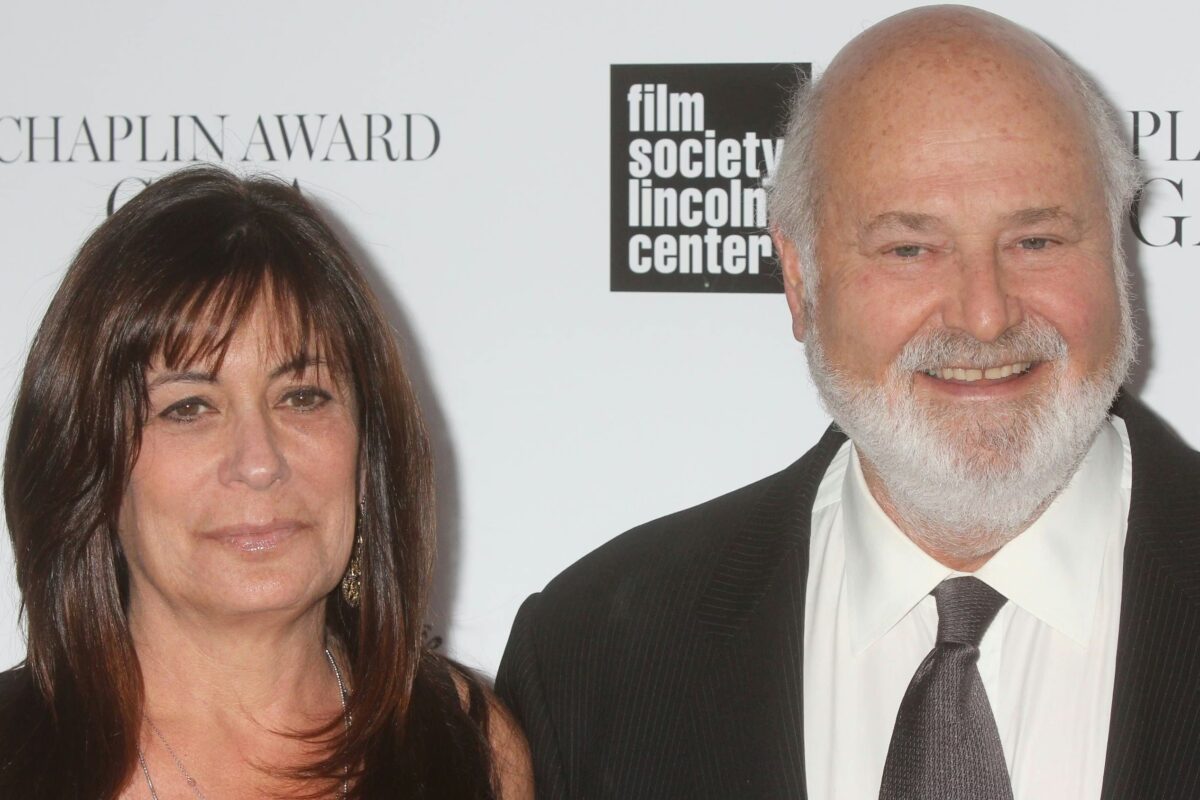
I can understand that acknowledging Trump and his administration’s antics can sometimes only stoke their flames. Like a typical schoolyard bully, they prod incessantly with the intent to provoke frustration, fury, despair. They don’t just like to make bruises, they want to press at them until their opponent yelps. That being said, with the Trump administration wheeling out any celebrity who is willing to lay at its feet for a chunk of change, it feels important to have equally powerful counterparts who signal resistance. Even when that resistance can feel fluffy, or a trifle performative, it can do wonders for a cause. Pop Princess and Wicked star Ariana Grande shared a link to the Palestine Children’s Relief Fund on her instagram story in 2024, which reportedly saw a significant spike in donations. Grammy darling Billie Eilish called out billionaires for their excessive greed in an impassioned speech at the Wall Street Journal Innovator Awards before donating $11.5 million to charities focused on food security and climate justice. The late actor Robert Redford staunchly endorsed the Democrats and opposed Trump’s reelection until his death this year. And the recently deceased director Robert Reiner and his wife, photographer and producer Michele Singer Reiner, were deeply entrenched in politics for decades, prompting comments from the President so loathsome and classless that even his Republican peers have recoiled.
The aforementioned Erika Kirk, whom Minaj joined onstage, lost her husband Charlie on 10 September 2025. The right-wing influencer was assassinated during an outdoor campus debate at Utah Valley University. Rob Reiner’s politics could not possibly have further diverged from Kirk’s; they stood firmly on opposite ends of the political spectrum. And yet, during an interview on Piers Morgan Uncensored, Reiner was horrified by the murder, unequivocally condemning the assassination: “that should never happen to anybody. I don’t care what your political beliefs are.”
The Singer Reiners were discovered in their California home and their cause of death was pronounced as homicide. Their son Nick was accused of murdering them and is currently being held in custody. The news was the sort of tragedy that can barely be approached with words. The stark dreadfulness of it; the shocking, relentless surrealness. The chronically online are usually a verbose set, but when the story broke, the comment section was dumbstruck. Instead of platitudes, there were remote, helpless comments, unable to grasp the immensity of reaction.
I expect very little from Trump. Few who lean my way politically do. He has shown himself to be a power-hungry, vulgar buffoon, boasting narcissistic tendencies and an insatiable hunger for oppressing those who question the status quo. His response when questioned about the death of the Reiners, though: it still had the power to startle me.
Taking to Truth Social, he described Reiner as “a tortured and struggling, but once very talented movie director and comedy star, [who] has passed away, together with his wife, Michele, reportedly due to the anger he caused others through his massive, unyielding, and incurable affliction with a mind crippling disease known as TRUMP DERANGEMENT SYNDROME, sometimes referred to as TDS.” Friends and admirers of Reiner, including celebrated director James Cameron, met the comments with undistilled anger. The Hill reported that almost two-thirds of Americans considered the statement “inappropriate.” I briefly visited conservative forums online—whose users often play Devil’s Advocate for Trump et. al.—and even those threads were unable to see such a reaction in a positive or neutral stance.
I prefer to refrain from weaponizing therapy-talk, but I don’t think you could conjure up a more fitting case-study for projection than the President of the United States. Alleging that Reiner caused others anger and suffered from derangement? I doubt anybody this year has caused more fury and shown themselves to be more unhinged than Trump. In every public address, every interview, every post made online, he provokes without the slightest whiff of subtlety, he meanders alarmingly, he presents us with baffling word-salads instead of simple answers to questions. He’s shown himself to be reactive, snarling at a reporter who asked an Epstein-related question to “quiet, piggy.”
A lot of Trump’s outrageous antics this year seem to be deliberate attempts to distract from the release of the Epstein Files. It’s a role well-suited to Trump, even if it didn’t come about by design but necessity. Since day dot of his initial bid for Presidency, Trump employed the crude tactic of diversion and subtraction to tremendous effect. Seeing as the tranche of files are being released—slowly and with a high volume of redactions—his diversions may become even wilder. Regardless of whether he really meant it or not, though, what he said probably rings true to what he feels. I won’t say believes, because I don’t think anybody as abjectly cruel and egomaniacal as him really holds beliefs. But I do think he feels, fundamentally, that those who oppose him—and anyone who cannot be of immediate use to him—are disposable. Those who see him for what he is—Rob Reiner declared Trump as “mentally unfit” to serve as President—are to be disassembled, shunned, and slandered without a shred of empathy or humanity. We should expect so little from Trump, but his post reverberated around the world nonetheless. That such a needless, fathomless, abyssal tragedy was incapable of permeating Trump’s viciousness underlined what many already knew: empathy is to the US President what sodium is to water.
The Singer Reiners seemed to have empathy by the truckload. While many celebrity endorsements begin and end with a fat cheque and a photo-op, the couple were steadfast in their philanthropic and political efforts for much of their careers. They put their money and their time where their mouths were. Rob was instrumental in overturning bans on same-sex marriage; he later said that Michele was the driving force behind his passion for the cause. Together the couple propelled forward a tobacco tax in California providing funding for early childhood programs. In her final years, Michele worked with those who had been wrongfully convicted via the Innocence Project, showing a commitment to a fair and equitable justice system. By all accounts, the pair felt deeply and used their humanity and conscience to guide their lives. It would have been possible for them to live a charmed and superficial life, perched atop of Hollywood amidst the glitz and glamour. They could have avoided the residue of a burning world around them and become engulfed in their own privilege. But they didn’t. And while they left too soon and in a manner deserved by no-one, they left a legacy that matters, and reminds us that change can come from the force of belief and determined, consistent action.
I don’t think that talent is a virtue. Bad people can make good art and good people can make bad art. I also don’t think we should treat the Hollywood elite like royalty. That being said, it takes empathy and humanity to craft the kind of films Reiner directed, and that talent ought to be celebrated. When Harry Met Sally, The Princess Bride, Stand By Me: while all different, they are stories brimming with love and longing, friendship and affection. Whether under the rusty canopy of Central Park or the desolate countryside of a childhood, they are worlds formed with warmth and care. Even Misery, the psychological horror thriller featuring a chilling performance by Kathy Bates, is evocative and frighteningly moving, a sinister foray into the psyche of an obsessive fan-girl. The magic of these films is probably lost on Trump and his cronies, the feckless billionaires who deal only with unfettered power, explosive, havoc-wreaking fuels, and ever-rising bank accounts, who see art as easily replaced by AI slop.
Not every celebrity or high-profile individual will be capable of, or inclined to, embrace political and social issues as Rob and Michele did. What they have left behind them shows the power of those with higher profiles engaging with causes beyond solitary donations (although of course donations should not be sniffed at). Maybe it shines a light on the question of duty that many grappled with this year: maybe it confirms that, yes, while pop stars and Oscar winners and Grammy darlings and producers and filmmakers should not decide a vote or a stance for you, their inextricable link with the culture should be harnessed for good. That any artist worth their salt should have the compassion so sorely lacking by the billionaire bigwigs, and not only use it to create works that allow us to transcend, but use it to drive social change and remind us that there is more than one regime.
In the end, the question isn’t whether celebrities should endorse or abstain. It’s whether power is exercised with any sense of responsibility to others. Trump’s orbit thrives on empty loyalty: praise given for proximity to power, devotion rewarded without conviction, empathy treated as weakness. Minaj’s turn toward MAGA is jarring not because it is unique, but because it exemplifies how easily influence can be stripped of meaning and repurposed for self-preservation.
Rob and Michele Singer Reiner offered a different model. Their politics were not costumes donned for attention or leverage, nor were they contingent on applause. They were sustained, imperfect, deeply human commitments to fairness, dignity, and care. In a culture increasingly shaped by spectacle, grievance, and transactional allegiance, their legacy reminds us that influence is not measured by proximity to power, but by what (and who) it ultimately serves. Empathy may not win elections, curry favor, or trend online. But without it, no amount of talent, fame, or authority means anything at all.